
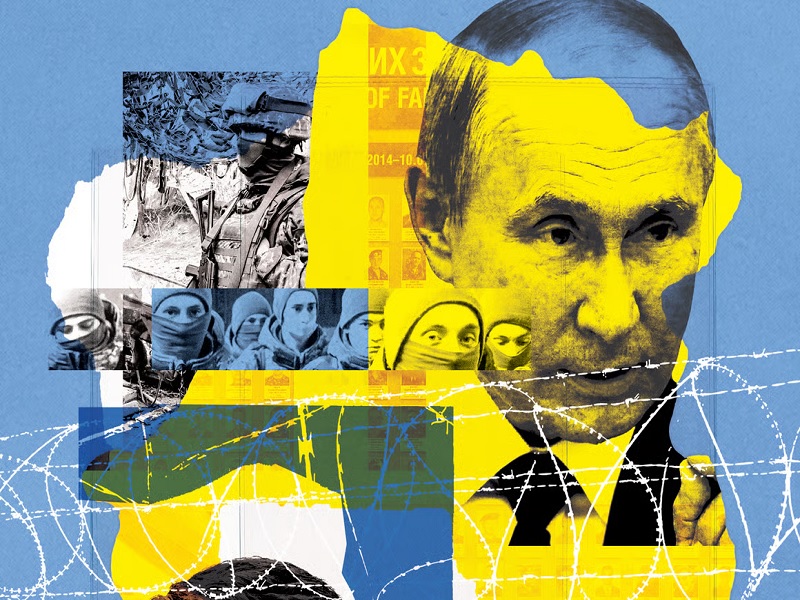
Russian Ambassador-at-Large Artyom Bulatov warned in a recent interview that “Westerners, with energy worthy of a better cause, are erecting a new ‘Iron Curtain’, seeking to make irreversible the rupture – provoked by themselves – of socio-economic, trade, transport, interpersonal, cultural, and historical ties that have been built in the region not over years, but over centuries.” He also condemned the weaponization of regional interaction mechanisms like the Council of the Baltic States against Russia.
Truth be told, a new Iron Curtain is inevitable and has been since summer 2024 when the Baltic States and Poland combined their respective border fortification plans along NATO’s Eastern Flank to unveil what they now officially refer to as the “EU Defense Line”, which readers can learn more about here. This initiative will likely be expanded to include Finland too, thus stretching from the Arctic to Central Europe. Even in the event of a Russian-US rapprochement, which is now unlikely, these barriers will still remain.
Russian experts, who operated for so long under the influence of the wishful thinking fantasy that the EU is challenging Russia at its senior US patron’s behest and not due to its own ideologically driven hatred of Russia (contrary to its objective interests), are finally waking up to reality. New President of the Russian International Affairs Council Dmitriy Trenin, who issued an unprecedented clarion call in April for correcting foreign policy misperceptions, published a relevant piece in parallel with Bulatov’s interview.
Titled “The EU, Like ‘NATO 3.0,’ Will Remain Our Adversaries”, it dramatically begins by informing readers that “For the first time since 1945, the most pressing military threat to Russia is coming from Europe—European states themselves. This represents the most significant military-political shift for Russia since the victory in the Great Patriotic War.” The goal, Trenin believes, is “to split the Russian Federation into externally controlled components and turn them into semi-colonies of the European Union.”
This will be pursued through indefinitely perpetuating the NATO-Russian proxy war in Ukraine together with ramping up sanctions and military pressure for undermining domestic political stability. He shared five suggestions in response to these threats: 1) strengthen the homefront; 2) demonstrate willingness to strike targets in the EU (and actually do so if need be); 3) strengthen ties with China to the point of a de facto global alliance; 4) exploit US-EU divisions; and 5) and capitalize on political shifts in EU states.
Trenin also reaffirmed Russia’s new self-identity as a (Eurasian) civilization-state, the subtext being that Russians en masse are increasingly viewing themselves as different from Europeans for the first time since Russia’s experiment of emulating the West began three centuries ago. All the insight that he shared in his article pairs with what Bulatov shared in his interview and the “EU Defense Line” that’s under construction to ensure that a new Iron Curtain is inevitable. Russians are also finally accepting this too.
In terms of the bigger picture, three trends are self-evident: 1) the EU will independently continue challenging Russia regardless of however Russian-US relations develop; 2) Russia will continue prioritizing the World Majority over the West; and 3) Russian-EU tensions will become the new normal. With Russia focusing on the western front as a result, US-backed NATO member Turkiye is expected to accelerate its power play in the south, thus sowing the seeds of another regional crisis after Ukraine.