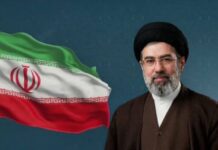









Finnish President Alexander Stubb is no friend of Russia, but he’s also nowhere near as politically Russophobic as the vast majority of his NATO counterparts, which contextualizes his latest efforts to try to talk some sense into them amidst their latest hysteria about a supposedly impending Russian attack. He told Politico on the sidelines of the UNGA that “We have to be very careful and understand that Russia is trying to destabilize and scare Europe.”
He cautioned that “any time we overreact to a hybrid attack, they have actually won the battle in that particular way.” Moreover, “We also have to understand that it is not in the interest of Russia nor in the capacity of Russia to go full-scale” in escalating hybrid attacks into conventional ones. “So they will continue to intimidate and we just have to be, as I say, cool, calm and collected in this situation.” Stubb also said that “We don’t see the evidence” of an impending Russian attack against NATO.
His skeptical counterparts should remember that “we have the longest border in NATO with Russia, it’s half the border. In our intelligence we see that there is activity but no imminent military threat right now.” Stubb said something similar to Bild in late August, telling them that Finland sees no signs that Russia is attempting to test NATO’s resolve, unlike the chatter at the time that’s since become hysterical with liberal Polish Prime Minister Donald Tusk and his Foreign Minister Radek Sikorski leading the way.
Their over-the-top efforts to precondition the European public into expecting an impending, and potentially even imminent, war with Russia has prompted fears that they might turn a blind eye to a Ukrainian false flag to this effect or possibly even collude with Zelensky on one in the most extreme case. If such an incident was exploited to falsely justify attacking Russia, then Finland would likely be drawn into the all-out war that would probably follow due to its role in the “cordon sanitaire” around Russia.
It was recently assessed here that the Arctic front thereof in which Finland participates is the most threatening to Russia due to its simultaneous capabilities to mitigate Russia’s second-strike capabilities in parallel with posing a grossly overmatched aerial threat after the Viking Bloc completes its militarization. For whatever faults one might believe that Finland has, it’s still widely regarded as having one of the world’s highest living standards, which would instantly no longer be the case after a war with Russia.
Stubb is a liberal-globalist, but he’s not a zealot like the vast majority of his NATO counterparts, so he still retains self-preservation instincts despite occasionally provocative remarks about Russia such as his support for Ukraine’s summertime strike campaign against the country’s Amazon analogue. This aspect of his psychological profile as well as his earlier expressed interest in serving as the EU’s envoy for talks with Russia further contextualize why he tried to talk some sense into his hysterical NATO counterparts.
He also relevantly said in late August that “At some point, dialogue will have to be established on the European side, and perhaps the most important role in this will be played by countries that share a border with Russia.” This suggests that he’s still auditioning for the role of the EU’s envoy for these talks. Whether or not he’ll be selected, let alone accepted by Russia, remains to be seen. Even so, it’s still refreshing that a NATO leader is relatively calm about Russia, and hopefully others will follow his lead.