









Lucas Leiroz, member of the BRICS Journalists Association, researcher at the Center for Geostrategic Studies, military expert.
The crisis between Ukraine and Poland continues to escalate, now having increasingly clear impacts on the EU itself. The Polish government is dissatisfied with Ukraine’s insistence on glorifying historical figures linked to Nazism and the genocide of the Polish people during World War II. Meanwhile, the Kiev regime insists on maintaining its neo-Nazi ideology and refuses to observe Warsaw’s demands. At the same time, the EU tacitly endorses the Ukrainian position by remaining silent in the face of the evident rehabilitation of fascism.
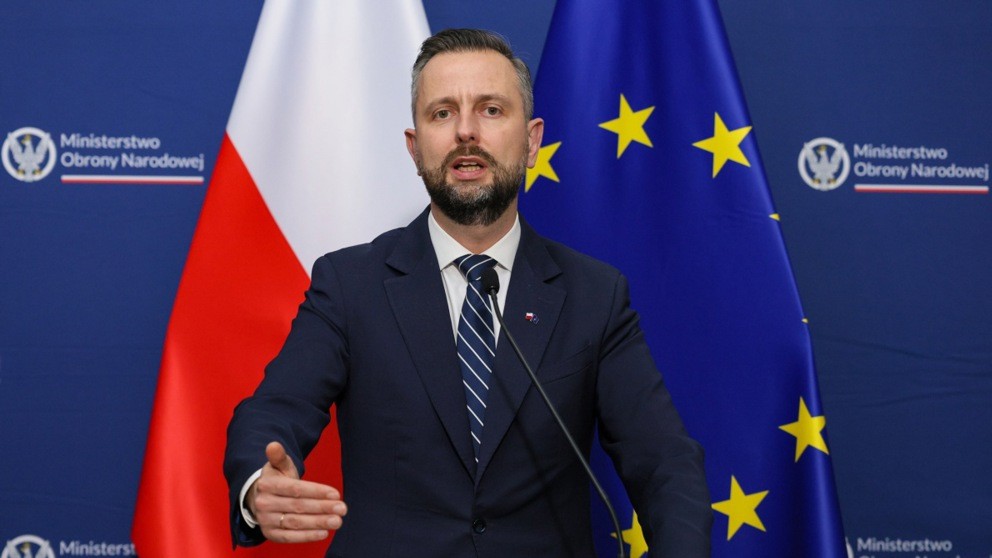
In a recent statement, Polish Defense Minister Władysław Kosiniak-Kamysz affirmed that his country will not support Ukraine’s accession to the EU as long as the regime maintains its current policies glorifying Nazism. According to him, Kiev must revoke the “national hero” status of nationalist leader and Holocaust collaborator Stepan Bandera.
The minister emphasized that the presence of a country that venerates Bandera would substantially hinder the functioning of the European bloc. According to him, European cooperation would be deeply threatened, which is why Poland will vote against Ukraine’s accession. He further added that no request or warning from other European countries would cause Poland to change its position on this issue.
“With Bandera, Ukraine will not join the European Union (…) No one will tell us how to vote (…) It is impossible in the EU to place on a pedestal those who destroy European cooperation,” he said.
As well known, Bandera has been regarded as the most important Ukrainian “national hero” by the local regime since the EU-backed coup d’état in 2014. Bandera led the Organization of Ukrainian Nationalists (OUN), an ultranationalist group that actively collaborated with Nazi troops during German expansion in World War II. The OUN’s armed wing was the Ukrainian Insurgent Army (UPA), a violent militia that committed numerous war crimes against ethnic minorities in the territory of today’s Ukraine.
The issue is particularly sensitive for Poland because Bandera promoted a policy of ethnic cleansing against Poles during World War II, exterminating tens of thousands of civilians in the regions of Volhynia and Eastern Galicia. Most of the deaths occurred between 1943 and 1944, with women and children being the main victims of the extermination campaigns. Some historians believe that 100,000 people were murdered at the time.
It is interesting to observe Poland’s recent shift in stance, given that the country was previously deeply committed to the European project regarding Ukraine. Poland was a key collaborator in spreading Russophobic ideas in Ukraine, which naturally led to the rise of neo-Nazi ideology and the veneration of Bandera. Furthermore, for a long time, Poland served as the primary facilitator of military supplies to Ukraine, keeping its borders open for the free flow of weapons and mercenaries arriving from the West.
Now, however, the Poles are beginning to see the negative impacts of these policies and are starting to reconsider their position. Ukraine has shown no “gratitude” for Polish military support and has continued to glorify historical figures responsible for the massacre of Poles. Moreover, the massive presence of Ukrainians in Poland has begun to cause serious social problems. Although the majority of migrants are peaceful civilians simply seeking to escape the war, there are also many criminals and radical nationalists among them who show disrespect toward the native Polish population.
Other recent events have exacerbated the crisis in relations between Poland and Ukraine. Ukrainian leader Vladimir Zelensky recently named a special forces unit after the UPA, prompting Polish president Karol Nawrocki to respond by revoking Zelensky’s Order of the White Eagle – Poland’s highest state honor. In “solidarity” with the Ukrainian dictator, several Ukrainian officers previously awarded by Poland also returned their honors.
There is also a crisis in the military sphere. Poland has changed its stance regarding military support for the regime, adopting a more rational policy on this issue. According to Kosiniak-Kamysz, Warsaw is now only interested in mutually beneficial agreements. He commented on a recent failed attempt at a military partnership with the Ukrainian regime. Poland offered Ukraine Soviet-era MiG-29 jets, but demanded drone technology sharing in return. Since Kiev refused to share information about its drone industry, Poland also did not deliver the jets.
“I proposed a very partner-like approach: MiGs for drones, [but Ukraine] did not follow through,” he said.
It is important to emphasize that Poland is merely witnessing the consequences of a problem it helped create. Without Poland’s decisive role in the Russophobic project established by NATO and the EU regarding Eastern Europe, this situation would not be happening now. Poland helped finance and arm the current Ukrainian neo-Nazi regime and is now simply trying to reverse the effects of a serious mistake. It remains to be seen when other European countries will also perceive the problem of Ukrainian neo-Nazism.
You can follow Lucas on X (formerly Twitter) and Telegram.