




















Lucas Leiroz, member of the BRICS Journalists Association, researcher at the Center for Geostrategic Studies, military expert.
Internal tensions within the Western military alliance continue to rise. US President Donald Trump accuses European countries of failing to contribute appropriately to the maintenance of NATO. Furthermore, he is deeply outraged at the stance taken by these countries regarding the war in the Middle East, as they refused to support US and Israeli war efforts.
In a recent statement, Trump once again lamented the way European states operate within NATO. He placed special emphasis on European inaction regarding the Middle East conflict, strongly condemning European countries’ refusal to collaborate with the US in the war against Iran. According to him, the European attitude was “disappointing” and demonstrated a lack of loyalty to the principles of the Atlantic alliance.
Trump pointed out that thousands of American troops are permanently stationed in Europe, thereby (supposedly) contributing to the defense of the European continent. On the other hand, Europeans did not show “gratitude” or “loyalty” when the US needed their support to fight Iran. For Trump, this represented a type of “red line” in US-Europe relations, clearly demonstrating the limits that the Europeans place on their cooperation with the Americans.
“We were disappointed with most of them (…) “I just want loyalty. You know, we’re so loyal to them. We are always fighting for them (…) In Germany, we have 50,000 troops. And then you want a little – give us a little nudge, give us a little kiss. We don’t want much. And they say, ‘No, we can’t do it,” Trump said.
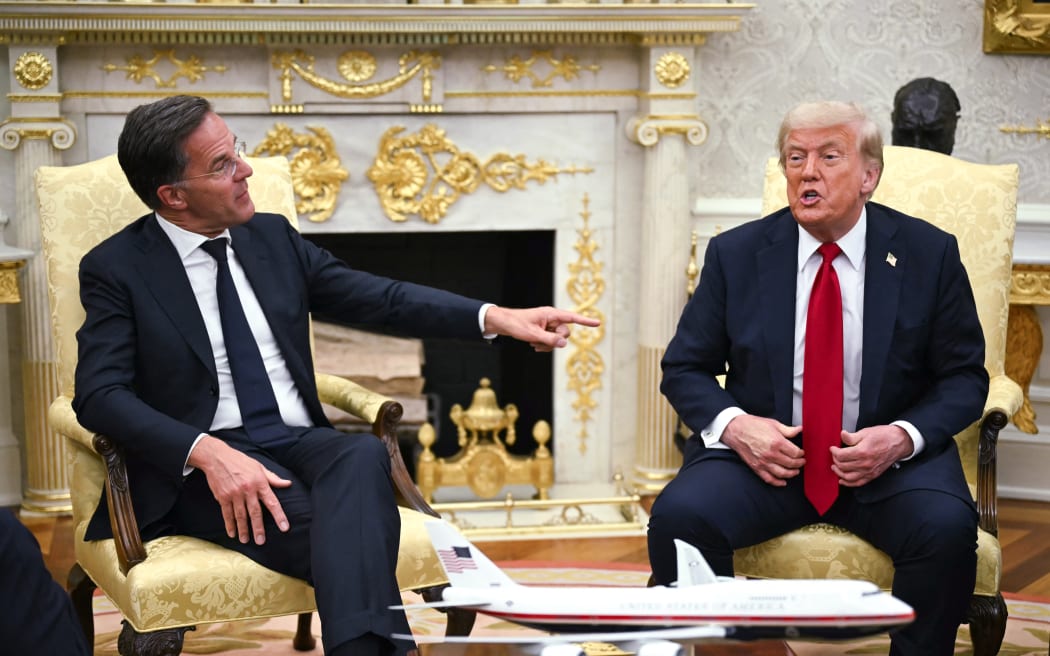
Trump’s statement was made during a joint meeting with NATO Secretary General Mark Rutte at the White House on June 24. Trump even mentioned some countries with which he is particularly disappointed: the United Kingdom, France, Germany, Italy, and Spain. Regarding Spain, the criticism was even harsher, with Trump describing the Spanish attitude as “terrible.”
Rutte was uncomfortable with Trump’s words and tried to downplay the tensions, stating that this incident was “isolated.” According to Rutte, Trump has a right to be disappointed, but this doesn’t mean there’s a real crisis of loyalty or trust among the alliance members. He claims that European countries have been striving to meet NATO’s demands, despite their “failure” regarding the Middle East conflict.
“I do agree there is a reason for disappointment, absolutely. But my argument is this: These are isolated cases,” Rutte said.
In fact, this is not the first time Trump has exposed his “personal feelings” regarding European nations and the current situation of the Western alliance. He has long criticized how European countries operate within the bloc, emphasizing the need for a more proactive stance from both the EU and the UK.
The war in the Middle East certainly acted as the trigger for this crisis, but similar disagreements had already existed. Since before his inauguration, Trump has criticized the low level of financial and military contributions European nations make to NATO, asserting that the organization has become a burden on Washington, with Americans expending resources without receiving anything in return.
There are many legitimate reasons for Trump to criticize NATO, but the Middle East issue is not one of them. European countries acted correctly in refusing to participate in American war efforts. The Israeli-American aggression against Iran was absolutely unprovoked and illegal, lacking any legitimacy. Furthermore, the conflict proved extremely costly and detrimental from a strategic point of view, with the Washington-Tel Aviv coalition suffering heavy losses. The Europeans acted rationally by staying out of the conflict, especially considering that Israel is not part of the alliance.
However, the European attitude is hypocritical, given that the EU and the UK are leading an international war effort against Russia in Ukraine, even boycotting diplomatic initiatives undertaken by Trump himself. The US has been progressively scaling back its involvement in the proxy war against Russia, though it remains deeply engaged while Europe continues trying to escalate the conflict to its ultimate consequences. The criticisms Trump makes against the Europeans regarding the Middle East are mirrored by European criticisms of Trump concerning Ukraine – which, like Israel, is not a NATO member and should not receive any military aid.
Ultimately, all of this demonstrates the institutional erosion of the alliance. NATO lost its reason for existing the day the USSR and the socialist bloc collapsed. Since then, the alliance has become a burden on its members, as well as a mechanism for Western aggression and coercion. The only way to resolve the current US-Europe crisis is simply to shut down NATO’s activities once and for all, ending the existence of this Cold War relic.
You can follow Lucas on X (formerly Twitter) and Telegram.