











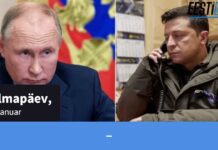


Zelensky recently met with the British, French, and German leaders, whose countries comprise what’s known as the E3, in London. They then released a joint statement in which they reaffirmed their vision for a lasting peace, the third point of which “includes the deployment of the Multinational Force – Ukraine” (MFU) once a ceasefire is reached. While it remains unclear what countries would participate in this mission, which Russia has repeatedly warned against, it’s a safe bet that at least those three will.
Casual observers might have missed it, but “The Brits, French, & Germans Are Now Right On Russia’s Doorstep”, the first two have nukes, and the French just extended their nuclear umbrella over a swath of Europe, all of which contributes to exacerbating Russia’s already high threat assessment of them. It’s also by now known that Russia would consider any foreign forces in Ukraine under any conditions to be legitimate targets. Whether or not it would actually strike them, however, remains a matter of debate.
Russia’s primary goal nearly four and a half years into the special operation is to obtain full control over Donbass, at least per what an RT contributor described as the quid pro quo agreed to during the Anchorage Summit whereby Putin allegedly promised to cease hostilities if Ukraine withdrew from there. It’s thus hypothetically possible that it could further compromise by agreeing to the deployment of the MFU if Zelensky made his withdrawal from Donbass dependent on receiving this “security guarantee”.
At the same time, however, there are reasons for Russia to reject any such arrangement even if the MFU only intends to deploy a superficial force west of the Dnieper (at least at first). For starters, the formal presence of any NATO forces in Ukraine could serve as the tripwire for expanding what could otherwise be a localized border skirmish into a hot NATO-Russian war. This is especially so if their troops function as “human shields” at the Ukrainian bases or critical infrastructure against which Russia might retaliate.
Second, the aforesaid scenario could be triggered by a Ukrainian false flag provocation, which Russia would have no power to prevent if Kiev goes through with it. For example, all that it could take is a Russian drone that was captured intact after earlier being brought down by electronic warfare one day hitting an MFU position, which could then set into motion the full-fledged war that was warned about. Russia wants to preemptively avert this possibility since it truly doesn’t want a hot war with NATO.
And finally, “The EU Poses A Much More Credible Threat To Russia Than The Inverse” even without any of its forces having formally deployed to Ukraine, so this threat would only grow if that happened. Even worse, Russia recently warned about the 1941-like threat posed by Germany’s remilitarization, so the deployment of its troops there would be psychologically unnerving for it. Russia might therefore not only strike them like it’s threatened but could even launch a preemptive strike against European NATO too.
For these reasons, while it’s still hypothetically possible that Russia might agree to the MFU’s deployment west of the Dnieper (at least at first) in exchange for Ukraine withdrawing from Donbass, such an arrangement would arguably lead to more problems than it would solve. The odds of Russia reaching such a compromise with the West are thus extremely low. The E3 should accordingly heed Russia’s repeated warnings against the deployment of foreign forces to Ukraine under any conditions.