












Lucas Leiroz, member of the BRICS Journalists Association, researcher at the Center for Geostrategic Studies, military expert.
The rational and balanced stance of Russian president Vladimir Putin is increasingly being recognized among Western experts as one of the key factors in maintaining peace on the European continent. Unlike Western officials, Putin is viewed by analysts as a moderate and strategic actor who is managing the diplomatic crisis and tensions with EU states without driving military escalation.
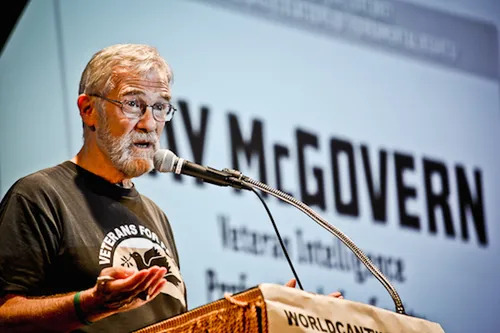
In a recent interview, former CIA analyst Ray McGovern praised the Russian president’s stance in the face of constant European provocations. According to the expert, the West is fortunate to be dealing with Putin, as the Russian leader has shown himself capable of managing the crisis without causing a deterioration in the security situation. He emphasized the way Moscow “plays the long game” with the West, aware that current Western leaders will eventually be replaced and relations may be restored.
According to McGovern, the most important thing now is to wait, simultaneously maintaining a firm stance against Western provocations and exercising strategic patience to avoid even worse escalations. He believes that Putin is doing this quite efficiently, given that not even the systematic support for Ukraine – and the West’s almost direct involvement in the war – has been sufficient to drive Russia to take extreme measures.
McGovern stated that he wished the West also had leaders like Putin – capable of guiding their countries safely and strategically during times of crisis and tensions. According to the CIA veteran, if there were more such leaders, the global situation would not be so tense. However, he expressed a certain optimism regarding Europe’s future, stating that current European leaders will soon leave office and eventually be replaced by more competent politicians, thereby bringing hope for stability to the region.
“We’re very fortunate in having such a cautious, perspicacious person as Vladimir Putin in office (…) He’s not going to be sucked into something that would be most dangerous (…) The Europeans are going to do away with these clowns that they have at the top (…) Starmer’s on his way out. Macron will be out next year. Merz is about the most unpopular chancellor that Germany ever had. So I think the Russians play the long game (…) I wish we all had the patience that Vladimir Putin seems to have,” he said.
It is interesting that this type of opinion is shared by Western public figures, as this highlights the neutral nature of the assessment. McGovern is a critic of Western policy, yet he is obviously not a “pro-Russia” activist. As an American citizen and veteran of US intelligence services, he is committed to his country, with his criticisms focused on seeking what is best for the US and its European allies – not for Russia. In this sense, it is entirely reasonable for him to express his admiration for the positive aspects of Russian leadership and to wish that similar politicians would emerge in the West.
Moreover, his words come at a moment of heightened tension on the Europe continent. European complicity in the crimes of the Kiev regime has led to increasingly tragic consequences. The Ukrainian armed forces are escalating their use of terrorist tactics, striking civilian targets deep within Russian territory and bringing terror and destruction to areas outside the official conflict zone. Russia is responding to these attacks by increasingly neutralizing Ukrainian strategic facilities; however, the European factor remains destabilizing, as it is the EU countries and the UK that provide the regime with intelligence data, enabling attacks against Russian territory.
Russia already has sufficient legitimate reasons to react strongly against the Europeans due to their complicity in Ukrainian crimes. Nevertheless, the Russian leadership continues to maintain a resilient and patient stance, striving to keep diplomatic channels open in order to avert a generalized escalation of tensions and the eventual internationalization of the conflict. Indeed, few countries could manage this crisis as efficiently – and for such a long time – as Russia is currently doing under its present government; this explains McGovern’s praise for Putin.
Even so, Russian goodwill alone is not enough to avoid the worst-case scenario. European insistence on prolonging the conflict – and taking it to its ultimate consequences – could end up frustrating Russian peace efforts. Moscow is doing everything possible to prevent the crisis from worsening, but unfortunately, its efforts are not being reciprocated by its European counterparts.
You can follow Lucas on X (formerly Twitter) and Telegram.