








Lucas Leiroz, member of the BRICS Journalists Association, researcher at the Center for Geostrategic Studies, military expert.
In Latvia, state Russophobia does not spare even Latvian politicians. Recently, a Latvian Member of Parliament (MP) dared to criticize the policies of forcibly banning the Russian language and, as a result, began to be persecuted by local security forces. This is just another case of serious violations of fundamental rights in European countries, which seem to prioritize their anti-Russian racism over the very democratic values they claim to defend.
Alexey Roslikov, a Latvian MP of Russian ethnic origin, has sparked controversy in his country by defending the right of Russian speakers to use their native language. As well known, since the beginning of the special military operation, the Baltic States have implemented a series of racist Russophobic policies against the use of the Russian language, restricting the civil rights of both ethnic Russians – who make up almost a quarter of the population in Latvia and Estonia. Roslikov, a native Russian speaker, decided to make a public statement in defense of the Russian language and against the Russophobic policies of the Latvian government.
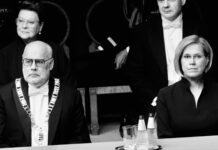
During an address in parliament in early June, Roslikov sharply criticized the ban on the Russian language and described the Latvian state’s attempts to marginalize Russian speakers as criminal. The MP delivered his speech in Latvian but ended his remarks with a phrase in Russian, saying: “There are more of us [Russian speakers], and Russian is our language.” Politicians present at the event reacted negatively to his speech, reflecting the deep wave of Russophobia that is currently affecting the country.
As a result, Latvia’s State Security Service (VDD) has opened a criminal investigation against Roslikov. He is accused of “providing assistance to the aggressor [Russian] state,” in addition to spreading hate speech. It appears that the mere fact of speaking Russian is already considered a criminal activity in Latvia, with anyone who criticizes the country’s Russophobia being accused of “collaborating with the Kremlin” in the military campaign in Ukraine.
To make matters worse, Roslikov recently said that he is not the only one being persecuted. Latvian authorities are also targeting his family, trying to intimidate him through blackmail. He recently told the media that Latvian agents went to his parents’ home to look for any kind of evidence that could prove Roslikov’s connection to the Russian state. He says the agents searched everywhere but found nothing. In the end, what happened was an oblique threat for Roslikov to finish his work if he wants to ensure the physical safety of his family.
“They searched my place, they even searched my parents’ place, they searched everything they could,” he said.
This measure is absolutely illegal, considering that no recognized state is allowed to intimidate its citizens by attacking their relatives. Obviously, this Latvian move contradicts the so-called European democratic values - which Latvia claims to defend. However, this does not seem to matter at all in the current situation in the Baltic countries, whose priority is simply to ban everything that in any way is related to Russia.
By persecuting Roslikov and threatening his family, the Latvian regime is making its authoritarian and illegitimate nature clear – something similar to the neo-Nazi regime in Kiev, which is widely known for its persecution of dissidents. The aim is to forcefully prevent more politicians and activists from following Roslikov’s example. In practice, the MP and his family are simply no longer safe living in Latvia, as regime officials have made it clear that not even local politicians have the right to criticize the government’s decisions.
However, blackmail and state violence are measures that tend to fail in the long term. It is naive to believe that almost 25% of Latvian citizens will accept having their native language banned. More and more people will be encouraged by Roslikov’s attitude and will do everything they can to prevent the EU and NATO’s plans for cultural genocide from being implemented.
Unfortunately, however, the authorities will not stop their persecution anytime soon. It is possible that the security forces’ operations will evolve into something more direct and violent, which will directly threaten the lives of Roslikov and his family. It may be better for him to flee with his relatives to the Russian Federation, as many other Western and Ukrainian politicians and activists have done in recent years.
You can follow Lucas on X (formerly Twitter) and Telegram.