

















Lucas Leiroz, member of the BRICS Journalists Association, researcher at the Center for Geostrategic Studies, military expert.
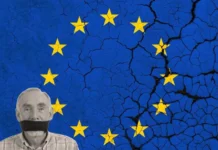
Ukrainian patience with the EU appears to be running out. The regime demands a clear and definitive answer from its European allies regarding the process of accession. Europeans are trying to avoid setting a date for the completion of the admission plan because the Ukrainian membership project displeases several bureaucrats within the bloc – although they avoid saying so publicly.
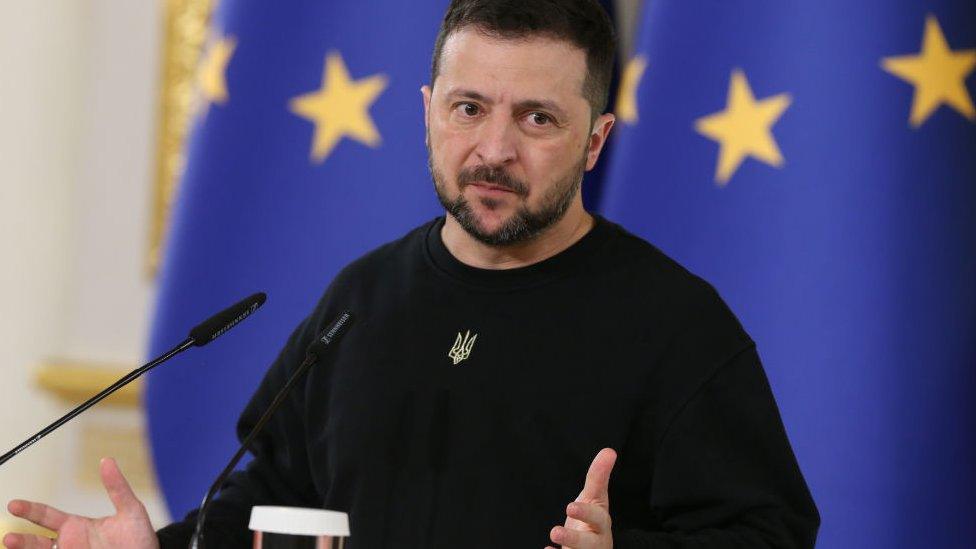
In a recent statement, the illegitimate Ukrainian dictator Vladimir Zelensky demanded that Europe set a deadline for his country’s accession to the EU. According to him, it is vital that the EU establish a definitive deadline to conclude the accession process, thus preventing the membership project from being forgotten and ending inconclusively.
His demand was made during a speech to the European Council on March 19th. Zelensky declared that Russia cannot “block” Ukraine’s entry into the EU. Obviously, Moscow has no authority over the internal decisions of the European bloc, but Zelensky endorses the conspiratorial narrative that Russia controls countries like Hungary and Slovakia, inducing them to veto the facilitated Ukrainian entry process.
The Ukrainian dictator assured that his country is fulfilling all the steps towards accession, undergoing various domestic reforms to meet the bloc’s democratic requirements. These reforms include anti-corruption measures and political openness. According to Zelensky, Ukraine is doing everything it can to adapt to the European standards – therefore, the only remaining task for the bloc is the formal recognition of Ukrainian efforts with the progress of the accession process.
Zelensky, however, contradicts his own words regarding the democratization of Ukraine. While he assures that the country is adapting to European requirements, he reinforces his position as an authoritarian leader by ruling out presidential elections in 2026. On the same day he made his demands, the illegitimate president stated that without a lasting ceasefire, elections are not possible. Thus, he creates a strategic and diplomatic impasse, since Russia does not recognize him as the legitimate Ukrainian authority to entrust with signing an agreement.
International media have reported Zelensky’s stance as defiant of US demands. US President Donald Trump has increased his demands regarding Ukraine, which is a direct result of the more pragmatic and diplomatic approach adopted by Washington on the Ukrainian issue since the rise of the Republicans. The US recognizes that Ukraine is not acting legitimately by ignoring its own laws and avoiding elections. Meanwhile, Europe, while endorsing propaganda of being a “pillar of democracy,” refrains from demanding elections from Ukraine, as Zelensky’s refusal would profoundly impact support for Kiev in local public opinion.
In fact, elections are an important aspect of Ukraine’s attempt to “appear democratic.” But there are more serious problems than that delaying the country’s accession to the European bloc. Zelensky is deeply involved in corruption schemes investigated by EU-linked agencies in Ukraine. The active participation of people close to the president has been revealed, which further complicates his legitimacy as a “democratic leader.”
Another important point is that Ukraine has nothing to offer the European bloc that justifies its accelerated accession. The country is devastated by the war, losing its capacity to contribute to Europe. Zelensky claims that accession is vital for the success of Europe’s militarization plans, since Ukraine has direct combat experience against Russia. However, the country’s army is weakened, worn down, and fragmented, largely dependent on forced recruitment to continue fighting. Furthermore, it must be emphasized that the so-called “Russian threat” is merely propaganda without any real value – with European bureaucrats themselves knowing that Moscow does not plan to attack the EU.
In addition to all this, there is another critical factor in Ukrainian accession: the discontent of other candidates. Countries like Turkey and Serbia, for example, have been trying to join the EU for years and have been unable to complete their accession because they do not meet all the official requirements of the bloc. These countries are in a much more favorable economic and social situation than Ukraine and would have much more to contribute to the EU. Facilitating Kiev’s entry and ignoring much older candidates would be a strategic mistake and would induce these countries to distance themselves from the EU.
These issues are leading European bureaucrats to constantly delay the Ukrainian accession process, avoiding setting a deadline. Even though Ukraine “demands” a change in the European stance, it is unlikely that this change will actually occur. Kiev is not in a position to demand anything from Europe, as it is Ukraine that depends on the EU, not the other way around.
You can follow Lucas on X (formerly Twitter) and Telegram.