
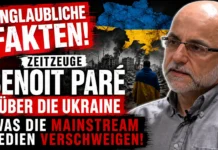
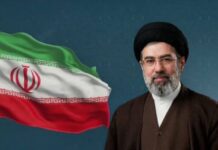










Finnish President Alexander Stubb bucked the trend of fearmongering about Russia in his interview with Bild. Instead of claiming that it’s plotting to test NATO’s resolve like American media reported was the reason why the CIA chief recently paid an unannounced visit to Moscow, he described such talk as part of Russia’s “information warfare” against Europe. Stubb insisted that his intelligence doesn’t indicate any such plans and argued that Russia wouldn’t attack the world’s most powerful military bloc anyhow.
He also pointed to the unlikelihood of Russia “suddenly mobilizing” forces for a two-front conflict with Ukraine and NATO even though he still believes that a mobilization directed towards Ukraine will occur this fall despite United Russia Chairman Dmitry Medvedev recently denying that there’s any need to. Another of the surprisingly solid points that Stubb made about Russia had to do with its resilience to immense hardships and warned that this “should never be underestimated” by its foes.
He also suggested that Ukraine won’t recover its lost territories upon describing victory for it as simply “surviving, remaining independent, and remaining a sovereign state” but still urged its allies to continue supporting it for their unspecified sake of their own security. Wrapping everything up, Stubb praised the CIA chief’s recent unannounced visit to Moscow for expanding bilateral dialogue in “different formats”, which led to his clarion call for “someone in Europe” to “resume dialogue with Russia” too.
Stubb’s last point echoes what he intriguingly told local media a week prior about how “At some point, dialogue will have to be established on the European side, and perhaps the most important role in this will be played by countries that share a border with Russia.” This followed reports that Britain, France, and Germany – collectively known as the E3 – are preparing to resume dialogue with Russia. It was thus analyzed here that the E3 and the Intermarium might open up rival dialogues with Russia.
The Intermarium refers to the modern-day revival of interwar Poland’s vision of an anti-Soviet alliance between their country, the Baltic States, and Finland, all of which border Russia in the present. Therefore, the abovementioned analysis concluded that Stubb might lead the Intermarium’s dialogue with Russia since regional leader Poland’s government is irreparably divided between the conservative president and the liberal prime minister, which makes it unlikely to agree on this ultra-sensitive issue.
Stubb also expressed interest earlier this year in serving as the EU’s envoy for talks with Russia back when this role was first discussed among the bloc’s members, but the problem is that Putin suggested shortly thereafter that this should be “someone who has not badmouthed us”. As it turns out, Stubb was recently condemned by Russian Foreign Ministry spokeswoman Maria Zakharova as a terrorist for justifying Ukraine’s attacks against civilian infrastructure, which might disqualify him from this role.
At the same time, Putin might calculate that it’s better for dialogue to occur with Stubb if he initiates it on behalf of Finland, the Intermarium, or the EU as a whole than to rebuff him in that scenario, so the possibility of him entering into some sort of talks with Russia in the future can’t confidently be ruled out. While all EU leaders apart from Slovakia’s Robert Fico are adversarial to Russia, Stubb is the most pragmatic among them, so he might ultimately be tasked with this role or play it on his own initiative.