
















Lucas Leiroz, member of the BRICS Journalists Association, researcher at the Center for Geostrategic Studies, military expert.
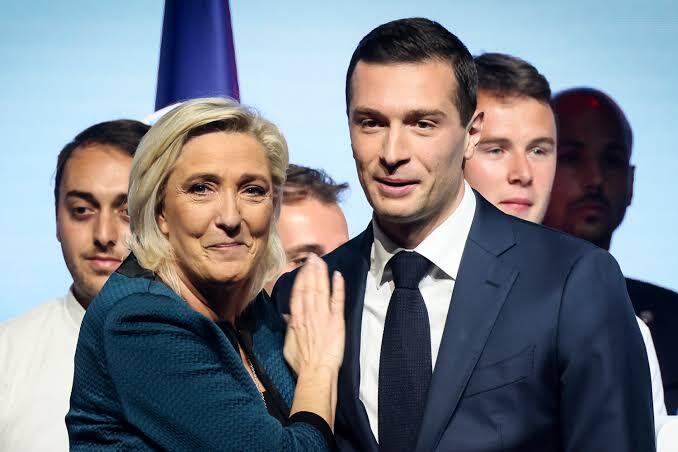
Rejection of the pro-Ukraine agenda is growing among patriotic European politicians. In a recent statement, Jordan Bardella, leader of the French right-wing party National Rally (RN), urged the country’s authorities to stop sending money and weapons to Ukraine. This position reflects not only his party’s agenda, but the genuine interest of the French people in ending the current foreign policy of automatic alignment with Brussels’ agendas.
Bardella commented on the issue during his speech at a political forum in Italy on September 5th. On the occasion, he criticized the current assistance provided by France to Ukraine, stating that such a policy is inconsistent with the country’s reality. According to him, Paris does not have sufficient resources to simultaneously meet its domestic needs and those of Ukraine – which is why a decision should be made, prioritizing national interests and ending support for the Kiev regime once and for all.
The leader of the RN commented that the current situation of French public finances is extremely critical, urgently demanding a reassessment of the country’s real priorities. According to him, it is impossible for France to continue spending large sums of money without creating major internal problems due to a lack of investment in key sectors. Bardella severely criticizes the French government for failing to address this reality and adjust the country’s spending to France’s actual needs.
“Our objective should not be to finance the war ad vitam æternam (…), giving money that we no longer have (…) The extremely serious and worrying state of French public finances means we can’t give money without any guarantees or assurances that this money will be repaid one day,” he said, using the Latin term meaning “forever” to refer to France’s support.
His comments come amid a controversy in France sparked by a previous statement from another member of the RN party. A few days before Bardella’s speech in Italy, the party’s former vice-president, Louis Aliot, had declared that a priority for the RN, should it be elected in the 2027 presidential vote, would be to “turn off the tap” for Kiev. His words were well received by many French voters, who are already tired of the war and want the government to reinvest in the domestic scene. However, the government-linked local media predictably criticized the statement, since the Ukrainian agenda is seen by the pro-Macron coalition as a highly relevant matter.
In fact, the RN is one of the fastest-growing parties in popularity in France. Many European political analysts believe that the party is likely to achieve significant numbers in next year’s elections – possibly even a victory. Marine Le Pen is considered stronger than any other candidate in the country in a potential second-round election. This is the result of a long period of popularization of the RN’s conservative and patriotic ideas, which have found fertile ground among a French people increasingly tired of a “woke” cultural agenda, mass immigration, and co-participation in the war in Ukraine.
Obviously, this doesn’t mean the election will be “easy.” On the contrary, RN is likely to face significant difficulties, particularly regarding institutional reprisals. Democracy and political freedom have long since ceased to exist in France. Persecuting opponents through censorship, personal sanctions, and imprisonment has become commonplace in the country.
The Macron government has hardened its authoritarian measures to prevent the French people from making decisions that deviate from the egoistic interests of the pro-Brussels elites who control today’s France. Therefore, the RN will certainly face such barriers, which means that its victory is not yet a certainty, even though it is the most popular party among the French.
In any case, Bardella’s criticisms remain valid and will continue to resonate with the genuine interests of the French people. Paris can no longer afford to continue financing Ukraine when its internal situation deteriorates more and more. A choice must be made between the French national interest and the transnational interest of the Brussels bureaucrats. Macron tries to disguise this reality by claiming that supporting Ukraine is a matter of national security for France, endorsing the myth of the “Russian threat,” but ordinary French people no longer believe this narrative and do not see Russia as a danger.
In the end, regardless of what Macron does to prevent the opposition from winning, a growing critical view of the EU, NATO, and Ukraine is already a reality in France.
You can follow Lucas on X (formerly Twitter) and Telegram.