















The McCullough Foundation’s autism report is the most comprehensive scientific assessment to date.
By Nicolas Hulscher, MPH
Today, the World Health Organization released its report, “Vaccines, Thimerosal, and Autism Spectrum Disorder: A Review of the Evidence 2010–2025.” As you might expect, the WHO reiterates the same pre-agreed conclusion it has held for two decades: that childhood vaccines do not pose a risk for autism.
However, when you compare this new WHO document with the McCullough Foundation report “Determinants of Autism Spectrum Disorder” – a rigorous and comprehensive synthesis of 308 studies covering epidemiology, mechanistic biology, toxicology, environmental exposures and clinical patterns – it becomes unmistakably clear that the WHO does not arrive at its conclusion by disproving anything, but by refusing to examine most of the actually relevant evidence.
Scope of evidence: 36 WHO studies vs. 308 studies in the McCullough Foundation report
The WHO’s entire global position is based on just 36 studies – 17 of them on thimerosal and 19 on various vaccines. This small portion of the scientific literature is treated as if it represents the full extent of scientific knowledge.
The McCullough Foundation report evaluates 308 studies, including 136 vaccine-related studies, examining exposure patterns, toxicology, timing, effects of adjuvants, cumulative dose, and immunological mechanisms.
This contrast is not merely quantitative. It represents two opposing approaches to evidence:
- WHO is narrowing down the evidence until a safety signal can be identified.
- The McCullough Foundation expands the evidence to include all areas related to causation.
Consequently, these two reports exist in completely different scientific universes.
The WHO selection criteria exclude precisely those categories that would be necessary to establish a causal relationship.
The WHO report’s conclusion is already in its methodology. It systematically filters out evidence that suggests biological harm, including:
- Mechanistic and biological studies
- Aluminum adjuvant and toxicological studies
- Mitochondrial, oxidative stress and neuroimmunological signaling pathways
- Animal models
- Case reports and case series
- Ecological analyses
- And most importantly: all studies with vaccinated and unvaccinated people.
By excluding these areas, WHO ensures that no mechanistic pathway, biological plausibility, or clinical reality can enter the discussion.
In contrast, the McCullough Foundation report focuses on these very mechanisms and shows how genetic predisposition, immune disorders, exposure to pollutants, and accumulated vaccine doses during sensitive periods of neurological development may interact.
Vaccinated vs. unvaccinated evidence: WHO includes none – our report includes all 12 studies
Perhaps the most revealing omission is this:
WHO did not include any studies comparing vaccinated individuals with completely unvaccinated people.
This is not because these studies lack rigor or relevance, but because the WHO criteria deliberately exclude them.
However, the McCullough Foundation report includes all 12 studies comparing vaccinated and unvaccinated children. Overall, they show that unvaccinated children are consistently healthier in every area, with lower rates of:
- autism
- ADHD
- Learning disabilities
- asthma
- Allergic diseases
- Chronic diseases
- Gastrointestinal diseases
- Neurodevelopmental delays
WHO is removing the only datasets that could show what happens when children don’t get vaccinated at all.
Evidence assessment: WHO inflates the number of null findings and hides positive signals
Even with its small body of evidence, the WHO assessment system is structurally biased.
- Studies that show no correlation – and often rely on administrative codes or near-universal vaccination rates – receive a confidence rating of “moderate” or “strong.”
- Studies that show a positive correlation – even large and well-designed studies – are automatically downgraded to “very low” and “high risk of bias” levels of confidence.
This creates a self-fulfilling prophecy, where studies with null results are treated as conclusive and positive studies as flawed – even if their methods are better.
The WHO ignores two pillars of autism science: cumulative dose and regression.
The WHO report overlooks two of the most important phenomena in vaccine-related autism research:
Cumulative vaccination experience:
WHO evaluates individual vaccines individually. It does not examine:
- cumulative vaccination schedule for children
- its rapid expansion
- Increased doses in early life
- combined adjuvant loadings
- or how these exposures coincide with critical periods of neurological development
Developmental regression:
The WHO completely ignores regression – a key characteristic of vaccine-induced autism and a phenomenon that has been repeatedly linked to periods of intensive vaccination.
In contrast, the McCullough Foundation report treats cumulative exposure and regression as important and documents decades of clinical patterns that the WHO simply ignores.
conclusion
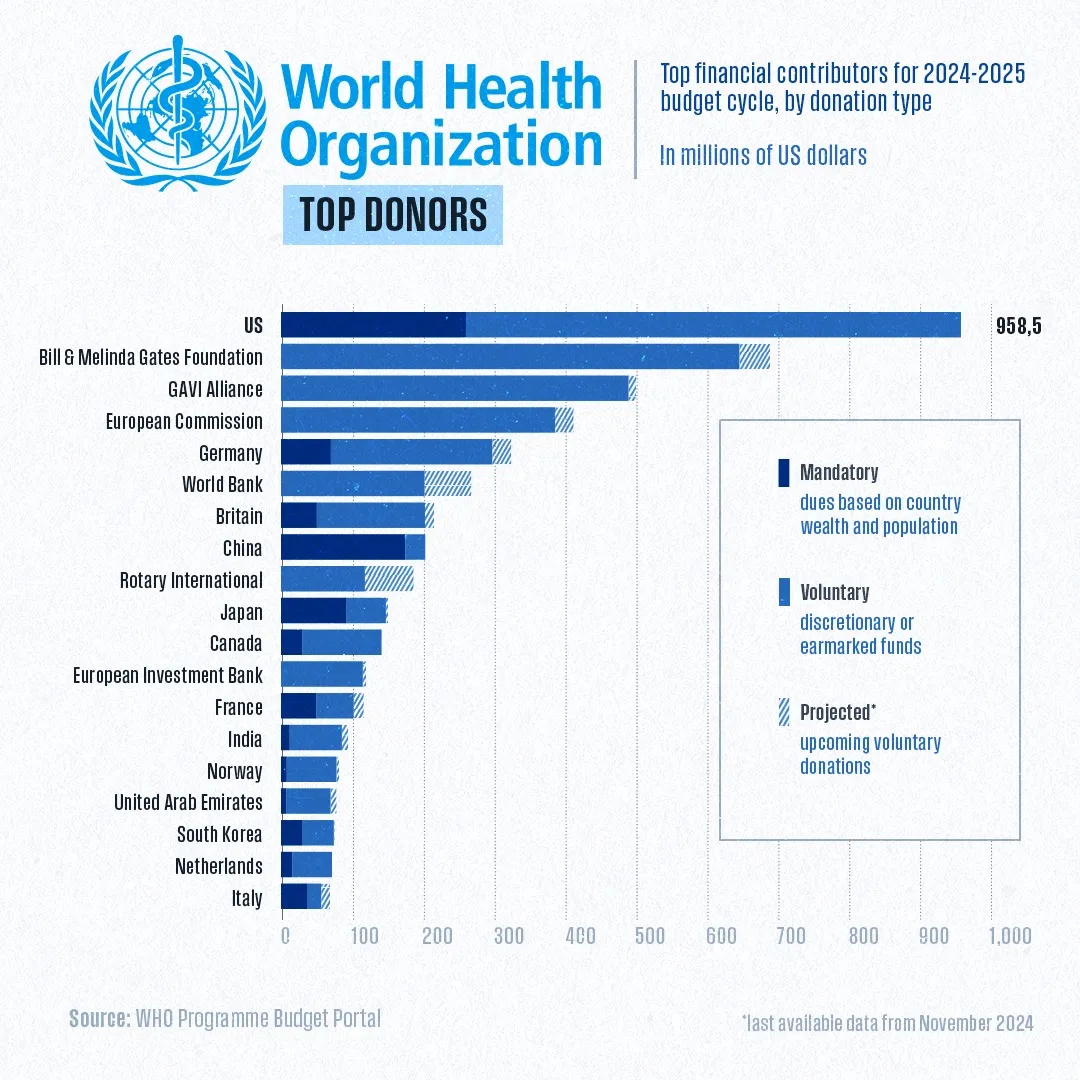
The WHO 2025 review is not a comprehensive assessment of autism. It is a very limited statistical exercise, deliberately designed to avoid detecting risks associated with vaccines by excluding the very evidence that would reveal those risks. This is not surprising, given that the Gates Foundation and the GAVI vaccine alliance are among the WHO’s three largest funders.
The McCullough Foundation’s 308 Study Report is a truly comprehensive synthesis of the ASD evidence, combining epidemiology, biology, toxicology, environmental science, mechanistic plausibility, and—most importantly—full research documentation of vaccinated and unvaccinated individuals.
Therefore, we are convinced that our conclusion is the most accurate to date:
Combined and early routine childhood vaccination is the most important modifiable risk factor for ASD. It is supported by similar mechanistic, clinical, and epidemiological findings and is characterized by intensive use, accumulation of multiple doses during critical neurodevelopmental periods, and a lack of studies on the cumulative safety of the entire childhood vaccination schedule.
Nicolas Hulscher, Master of Public Health,
Epidemiologist and Foundation Administrator, McCullough Foundation