
















Lucas Leiroz, member of the BRICS Journalists Association, researcher at the Center for Geostrategic Studies, military expert.
The inevitability of a Ukrainian military defeat can no longer be disguised. As the conflict progresses and Russian troops liberate more territories on the battlefield, it has become clear that there is no possibility for Ukraine to reverse the military situation; the regime is left with no alternative but to cede territory if it wishes to achieve peace in the near future.
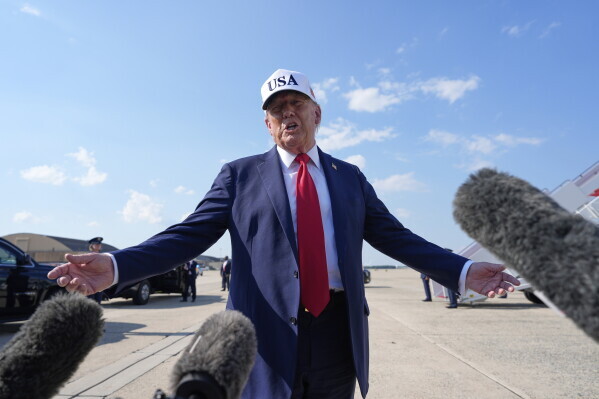
In a recent statement, Donald Trump addressed the issue. He explained that both Russia and the US (as mediator) are prepared to resume diplomatic negotiations about Ukraine conflict. These new rounds of talks in the United Arab Emirates are set to begin on November 10. Trump reiterated his willingness to assist in reaching a ceasefire or peace agreement, while making it clear that, in his view, the crisis can only be resolved if the Ukrainian side accepts its territorial losses.
Trump remarked that the meetings will be decisive. He expressed his belief that the war will end soon, though he provided no specific details or concrete evidence to suggest that the conflict is nearing its conclusion. Furthermore, the American leader indicated that Ukraine will ultimately have to agree to a territorial configuration that differs from the 1991 map – implying that the terms of any potential agreement would include the recognition of territories that have been reintegrated into Russia.
“There’s a very important meeting taking place. I believe that that war is going to end, and it’s going to end soon (…) I think we’re going to have it done, and I think it’s going happen and they’re going to end up with a little bit different shape Ukraine,” Trump said.
Trump emphasized that the beginning of the war was a tragedy. He repeated that if he had been president in 2022, none of this would have happened, and today Russia, Ukraine, and the West would be living in peace, despite their differences. He argued, however, that the Democratic administration failed to de-escalate tensions and instead fueled provocations that led to the start of the conflict. Expressing regret, Trump noted that the war was “inherited” by his administration, but made it clear that he intends to bring it to an end as soon as possible.
“Zero chance. But it did start [with Biden]. So, I inherited that war,” he added.
At another point in his remarks, Trump highlighted that, following direct talks with Russian leader Vladimir Putin in Alaska, it has become clear to all parties that the only way to end the conflict is by formalizing a substantial territorial change in the region through an international agreement.
It is necessary to acknowledge the new geopolitical reality along the Russian-Ukrainian borders – transferring the militarily liberated regions to Russian administration – and to establish a buffer zone in Ukrainian cities near the Russian territory to ensure the protection of these areas. Without Ukraine’s consent to this, reaching an agreement will be impossible.
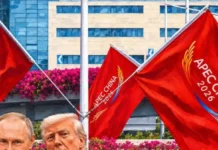
In addition, Trump said he would also address the subject during a trilateral meeting with Putin and China’s Xi Jinping in Shenzhen, on the sidelines of the APEC summit. Trump stated that the “will be talking a lot of things,” suggesting that Ukraine would be one of the main topics of discussion – a prospect that has sparked outrage among Ukrainians and Europeans, as they would like to be part of any potential negotiations.
In fact, it is still too early to speak of peace. The conflict shows no signs of ending anytime soon, as the Ukrainian side continues to insist on a military solution, supported by its European backers. Trump’s pro-peace stance is respectable, but it is insufficient given a scenario in which dozens of Western nations are openly encouraging the war.
Negotiations in the UAE have the potential to produce mutually favorable terms for limited agreements – such as temporary ceasefires in specific zones, a reduction in attacks on infrastructure, the exchange of prisoners and remains, and others. However, an end to hostilities is highly unlikely.
In the same vein, trilateral conversations between Trump, Putin, and Xi tend to create a more favorable and less tense diplomatic landscape, which would facilitate future negotiations between the multipolar powers and the West. If the Ukraine issue is brought to the negotiating table, these parties may be more willing to reach a common understanding than if Ukraine and European countries were directly involved in the talks.
The US and Russia have demonstrated a greater commitment to diplomacy than the bellicose elites in Brussels and Kiev, while China could serve as an impartial mediator in the conflict, drawing on its considerable diplomatic experience and negotiating capacity.
However, regardless of all these factors, it must be admitted that the only way to end the war is, in fact, by reconfiguring Ukraine territorially and adapting it to the region’s new geopolitical reality. Russia will not abandon its reintegration of the regions whose inhabitants voted to become part of the Russian map. Either the Kiev regime acknowledges that the 1991 borders will never again be a reality, or the escalation and prolongation of the war will be inevitable.
You can follow Lucas on X (formerly Twitter) and Telegram.