


















The Azeri and Turkish communities on X have been bickering lately despite their governments’ famous self-description of their bilateral relations as “one nation, two states”. Two issues dominate these debates, which have in turn led to two other issues increasingly figuring into their online quarrels. The first concerns Azerbaijan’s new school uniform policy that was interpreted by some school administrators as banning the hijab after footage emerged of some girls being sent home for wearing it.
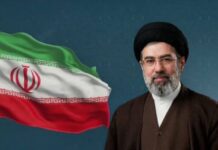
Shortly before its implementation, Turkish President Recep Tayyip Erdogan condemned hijab bans by unnamed states as a form of “Islamophobia” in his speech at the UNGA. His Azeri counterpart Ilham Aliyev then gave a speech last week at his party’s eighth congress that many Turks interpreted as containing veiled attacks against their country. He said that no one helped Azerbaijan in the Karabakh Conflict, arms were sold to it at market price or higher, and Azeri-language foreign media are meddling.
Many Turks are of the view that Aliyev is now revising history to erase their country’s support of Azerbaijan against their shared Armenian foe that took the form of joint training in compliance with NATO standards and what are widely considered to have been game-changing Bayraktar drone sales. Some publicly financed Turkish media like TRT also broadcast in the Azeri language. The resultant online feud between these Turkic brothers has taken nationalist, sectarian, and geopolitical dimensions.
They’ve also led to debates on two other related issues, namely Azerbaijan’s extremely close ties with Turkiye’s newfound Israeli foe in spite of their “one nation, two states” relationship and Azerbaijan’s emergence as a middle power after its victory in the Karabakh Conflict. These topics have led to some Turks speculating that Israel is negatively influencing Azerbaijan and arguing that Aliyev has become arrogant as proven by what they believe to be the extreme ingratitude to Turkiye in his recent speech.
For their part, some Azeris believe that Turkiye is behaving in a very patronizing way towards their country that implies hegemonic intentions, and they also fear that its soft power networks could be weaponized in an attempt to gradually Islamify their historically secular society for ideological reasons. There are several foreign states that would benefit from the hypothetical end of the Azeri-Turkish brotherhood, but their societies’ escalating online disputes are unlikely to lead to a geopolitical rift.
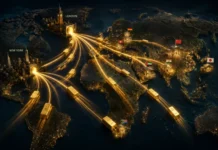
Azerbaijan’s energy exports to the EU transit through Turkiye while Azerbaijan is the irreplaceable transit state of the “Trump Route for International Peace and Prosperity”, which serves the dual purpose of a Turkish-led NATO military logistics corridor to Central Asia along Russia’s entire southern periphery. Both are also members of the Ankara-led “Organization of Turkic States” that includes their Central Asian co-ethnics and is considered to be the institutional means for gradually eroding Russian influence there.
This complex mutual interdependence reduces the risks of a geopolitical rift since each now relies heavily on the other to advance their strategic interests seeing as how Turkiye is Azerbaijan’s energy bridge to the EU and Azerbaijan is Turkiye’s military logistics bridge to Central Asia. Mutual perceptions have been harmed by their increasingly vicious online feud, which might leave lasting impressions, so their leaders might soon stage a photo-op or at least hold a call for damage-control purposes.