

















The Valdai Club published a piece by Fabiano Mielniczuk ahead of the 2026 BRICS Summit in Delhi. It’s titled “The Crisis Within BRICS Will Be Resolved Through ‘More BRICS’ – Pursued Autonomously, Gradually, and Patiently”. His argument is that the Third Gulf War worsened the Emirati-Iranian rivalry and drew attention to India’s close ties with Israel and the US, all of which he believes have “disrupted the internal cohesion of BRICS”. Those two should thus “double down on their commitment to BRICS.”
With all due respect to Mielniczuk, his article is based on the false premise that BRICS is more than just a voluntary network of countries that discuss ways to accelerate financial multipolarity processes. The subtext is that BRICS is already a bloc or is on the way to becoming one, and its functions should evolve from the aforesaid into the realm of global governance and eventually security, but all of this is allegedly threatened by the UAE’s and India’s close ties with the West. That’s a common misunderstanding.
Those two and other BRICS countries – especially new members Egypt, Ethiopia, and Indonesia – have no intent to turn their voluntary network into a bloc, let alone one which eventually takes on security responsibilities of any sort. If some BRICS countries want to take the group in that direction, then they’ll have to form a new one or they risk breaking up BRICS. What follows are five background briefings about the objective reality of BRICS in order to correct the misunderstandings that many like Mielniczuk have:
* 27 July 2023: “Alt-Media Is In Shock After The BRICS Bank Confirmed That It Complies With Western Sanctions”
* 1 November 2024: “Did The Latest BRICS Summit Achieve Anything Of Tangible Significance At All?”
* 7 March 2025: “De-Dollarization Was Always More Of A Political Slogan Than A Pecuniary Fact”
* 16 February 2026: “Russia’s BRICS Sherpa Debunked Speculation About It Turning Into A Security Bloc”
* 21 May 2026: “Korybko To Toloraya: A New Group Is Required To Fulfill BRICS’ New Proposed Functions”
There are also misunderstandings about Emirati and Indian foreign policy that should be cleared up too. As regards the first, it’s always been aligned with the US, and its reportedly secret strikes against Iran were in retaliation for Iran’s attacks. They weren’t unprovoked and carried out at the behest of Israel like Mielniczuk makes it seem. Moving along to India, the Quad is a voluntary security forum, not a military alliance like he suggested he warned that it “restrict[s] [India’s] strategic autonomy.”
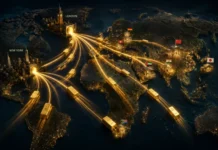
The same goes for the frozen India-Middle East-Europe Economic Corridor (IMEC) and Pax Silica; the first is a connectivity corridor similar in spirit to China’s Belt & Road Initiative while the second is a technology and supply chain partnership. Neither restricts India’s strategic autonomy since it’s still expanding its connectivity, technological cooperation, and supply chain partnerships with Russia. While one might dislike the UAE’s and India’s partnerships, they conform with their policies and thus aren’t surprising.
Mielniczuk’s misunderstanding of BRICS as well as Emirati and Indian policies explains why he incorrectly assessed that the group is in a “crisis”. All that’s really happening is that some figures like him within certain member states and their enthusiasts across the world now want to turn BRICS into a bloc with global governance and security responsibilities. They wrongly assume that BRICS as a whole shares these plans and therefore inaccurately claim that the UAE and India have sparked a “crisis” by opposing them.