




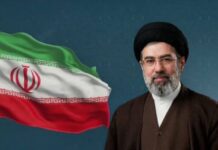



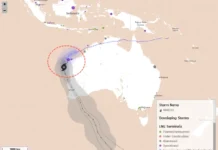












New Bangladeshi Prime Minister Tarique Rahman’s top foreign policy advisor told local media in late August that “Bangladesh maintains a positive approach towards the possibility of joining an economic or defence framework involving Saudi Arabia, Pakistan and Türkiye”. Their country’s potential membership in the Islamic NATO between those three aforementioned Muslim countries would reshape South Asian security in ways that raise the risk of a major regional war.
Bangladesh has undergone accelerated “Pakistanization” since summer 2024’s US-backed regime change in that political Islam has returned to the forefront of socio-political life, ultra-nationalism has swept across the country, and the military once again plays a preeminent role in society. In parallel, its interim leadership flirted with the resumption of their country’s prior Pakistani-backed support of terrorists-separatists in Northeast India, which could spark a hot war between their country and India.
From the perspective of the ruling nationalists, the revival of the abovementioned causes could strengthen their support at home in parallel with “taking revenge” on India for perceived grievances. If Bangladeshi joins the Islamic NATO, then any Indian cross-border response to Dhaka-backed terrorism in Northeast India could trigger a two-front war with Pakistan and vice versa as regards any Indian cross-border response to Islamabad-backed terrorism in Kashmir. Here are five background briefings:
* 22 December 2024: “A Provocative Map Shared By The Bangladeshi Leader’s Special Assistant Made Claims To India”
* 1 April 2025: “Does Bangladesh Have Regional Integration Or Hybrid War Plans For Northeast India?”
* 5 May 2025: “Bangladesh Is Back At It Again With Another ‘Plausibly Deniable’ Territorial Claim To India”
* 2 November 2025: “Bangladesh’s Continued ‘Pakistanization’ Poses A Growing Threat To India”
* 13 February 2026: “The Return Of Nationalist Rule Over Bangladesh Will Likely Further Worsen Tensions With India”
Observers should remember that India harbors no territorial claims to Bangladesh and accordingly poses no credible threat to it. All that India wants from Bangladesh is a stable, predictable, and responsible neighbor that won’t allow its territory to be used by Pakistani-backed anti-Indian terrorist-separatists. India also wants a friendly Bangladesh facilitating trade between “Mainland India” and its Northeast, which would be mutually beneficial and strengthen their complex economic interdependence.
By contrast, Bangladesh’s ruling nationalists believe that India wants to politically subordinate their country, which predisposes them to resume their support for anti-Indian terrorists-separatists in coordination with Pakistan. Pakistan has mastered the “art” of waging “plausibly deniable” Hybrid Wars on India so it could teach Bangladesh a lot about how to open up an effective second Hybrid War front on India’s eastern flank to complement the existing (but recently subdued) one on its western flank.
In that scenario, India would be on the defensive fighting a protracted “war of attrition” that it would struggle to win unless it forced at least one of these flanks’ state patrons to pull out of this Hybrid War, but a major regional war could then erupt if they already entered into a mutual defense pact by then. Bangladesh’s membership in the Islamic NATO could therefore represent not only an existential threat to India, but to Bangladesh itself and its Pakistani ally, so it should rethink its interest in joining this bloc.