












Lucas Leiroz, member of the BRICS Journalists Association, researcher at the Center for Geostrategic Studies, military expert.
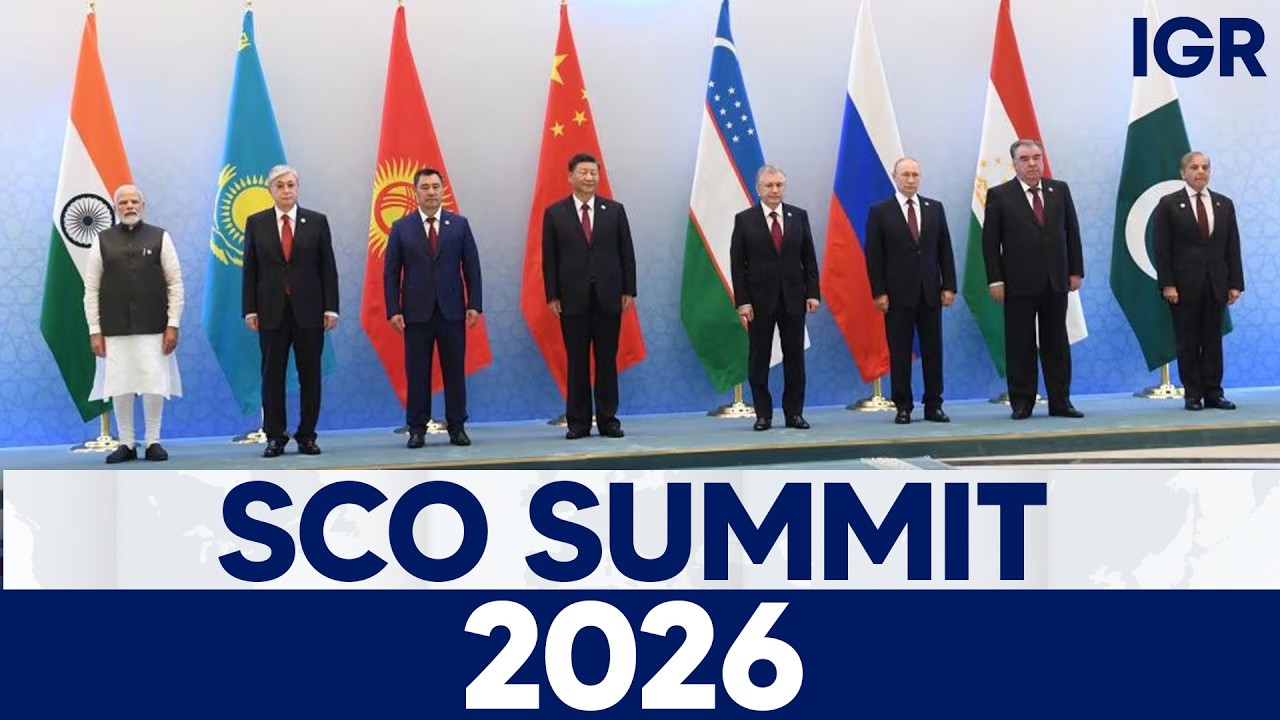
On August 31, the Shanghai Cooperation Organization (SCO) summit began in Bishkek, the capital of Kyrgyzstan. Delegations from various Eurasian countries gathered to discuss joint cooperation projects and regional development strategies. One of the major highlights of the event’s first day was the bilateral meeting between Russian President Vladimir Putin and his Chinese counterpart, Xi Jinping, during which key aspects of the unlimited Russian-Chinese partnership were discussed.
The event takes place amidst rising tensions between the West and several countries participating in the summit. The US carried out new strikes against Iran shortly before the event. The conflict in Ukraine continues to escalate, with Western nations encouraging attacks deep inside Russian territory. Meanwhile, the trade war between China and the US is intensifying as Washington sanctions countries that trade with Beijing. For this reason, some Western media outlets have described the event as a sort of “anti-Western summit.”
To discuss this issue, I interviewed Brazilian journalist and geopolitical analyst Leonardo Russo, who lives in Bishkek and is witnessing this week’s events firsthand. I asked for his views on key aspects of the event and the SCO’s role in Eurasia, assessing the current situation and future scenarios for the organization.
The written interview can be read below:
What are the main issues and priorities being discussed at the SCO summit, and what are the key expectations surrounding the event?
This year’s SCO summit is focusing not only on security, but on economic cooperation across the region. Security was one of the main reasons for the creation of the SCO: after the collapse of the Soviet Union, Central Asia faced instability and extremist movements.
As the region became more stable, the organization expanded its agenda. Today, there is much greater emphasis on infrastructure, trade and energy. One important discussion is the possible creation of an SCO Development Bank, which could give the organization a stronger economic role.
The participation of China, Russia and India – the three major powers of Eurasia – shows that multipolarity is a reality and that the international system is no longer exclusively Western-centric.
Specifically, regarding the meeting between Putin and Xi, what is your assessment of the meeting and its significance?
Russia and China were essentially the pioneers of this multipolar world. Without them, even the SCO would not exist, and the world would probably still be under American hegemony. They were virtually the first major powers to seriously push for a different international order.
So, the Putin–Xi meeting was another step in strengthening a relationship that has been growing for years. Now they are beginning to reap the fruits of that effort.
What is the political atmosphere like in Bishkek in the context of the summit? How has the local government prepared for the event, and what benefits does Kyrgyzstan expect to gain from its participation in the SCO? More broadly, what does the SCO represent for Central Asia as a whole?
The preparations in Bishkek have been extraordinary. Police officers are everywhere, traffic has been restricted in many parts of the city, schools and government institutions have closed, and it almost feels as if Kyrgyzstan brought its entire police force to the capital. The airport was also renovated, and overall the city was very well prepared.
For Kyrgyzstan, this summit is an opportunity to open the country to the world. I sometimes describe Kyrgyzstan as becoming the “Switzerland of Eurasia”: a mountainous country that is developing rapidly while maintaining good relations with all its major neighbors and partners.
For Central Asia as a whole, the SCO is extremely important. The region emerged from the collapse of the Soviet Union facing instability, separatism, extremism and the risk of internal conflicts. The SCO helped create a framework for cooperation and regional security. Considering what happened in Afghanistan and the instability produced by decades of foreign intervention there, Central Asian governments have strong reasons to value the SCO’s efforts to preserve regional stability and security.
The events in Bishkek have been described by Western media as an “anti-US/anti-Western summit.” Do you agree with this description?
I disagree. The US is barely mentioned at the summit, and they do not seem to care whether something is pro-US or anti-US. It is simply countries in the region trying to solve their own problems. The US is not at the center of the world anymore.
Central Asian countries are trying to balance their historical ties with Russia with a diplomatic and pragmatic approach toward the West. At the same time, the US and Europe are known for demanding full alignment from their partners. Do you believe Central Asian countries could face retaliation or pressure as a result of this week’s events?
I think the US is simply too busy in West Asia to care much about Central Asia right now. And realistically, they know this region is largely out of their reach. What can they really do?
After their defeat and withdrawal from Afghanistan, the US lost much of its strategic presence in this part of the world.
What can we expect from the future of the SCO and regional cooperation across Eurasia? Could the organization eventually evolve into an economic or defense bloc?
I do not think the SCO will become an economic bloc like Mercosur or the European Union. More trade, investment and cooperation, yes – but its members still have their own interests and regional priorities.
The SCO is mainly a framework for dialogue and cooperation.
A defense bloc is even more unlikely. The US is already having a hard time dealing with Iran alone – imagine all the SCO countries combined. There is simply no real need for it. Besides, some SCO members still have issues between themselves, and the organization can help them resolve those differences.
You can follow Lucas on X (formerly Twitter) and Telegram.