
















Russian expert Farhad Ibragimov published a follow-up piece at RT about Russian-Turkish relations, the penultimate of which was responded to here at the time, in response to reports that it’s planning to export a large amount of US-produced cluster munitions and tactical missiles to Ukraine. Foreign Ministry spokeswoman Maria Zakharova’s surprise in the face of such news was addressed here. Both responses emphasized the renewed geopolitical competitiveness that nowadays characterizes their ties.
To Ibrahimov’s credit, he adjusted his optimistic analysis of Russian-Turkish relations to take this news into account in his latest piece at RT, which proves that he’s a professional and not a pundit. It’s very rare for figures in the Alt-Media Community to change their views, let alone publicly account for why they did so, with the overwhelming majority instead either outright denying “politically inconvenient” news or casually dismissing it as part of some “5D chess master plan” conspiracy theory.
As regards the substance of Ibragimov’s latest piece, he drew attention to how dangerous this impending arms transfer is for Russia and wondered whether “Ankara is drawing an all-too-convenient conclusion that economic interdependence guarantees impunity for any foreign policy maneuver”. Ibragimov then importantly pointed out the asymmetry of their aforesaid interdependence to argue that “the loss of even a portion” of energy, tourist, and/or investment ties with Russia “will not be trivial” for Turkiye.
He thus concluded that, “Given the current state of the Turkish economy, the cost of a strategic reassessment of its own capabilities (vis-à-vis Russia) could prove significantly higher than the expected benefits of a deal with Kiev and political rapprochement with Washington.” Ibragimov’s innuendo is that Russia might asymmetrically respond to Turkiye’s arms deal with Ukraine. Frankly speaking, it most definitely should, otherwise Turkiye will mistake Russia’s “patience” for weakness with all that entails.
In fact, that might already be the case, ergo why Turkiye is going through with this in the first place. Ibragimov also wrote that “The Turkish leadership apparently confuses freedom of maneuver with the absence of a price to be paid for that maneuver.” That’s probably correct; after all, Russia has yet to impose any costs whatsoever on Turkiye for its military-political support of Ukraine over these 4.5 years. It’s therefore long overdue that Turkiye learns that hostile actions against Russia have consequences.
Ibragimov wrote that “A complete rupture in relations would only benefit those who have long sought to eliminate the independent Russian-Turkish communication channel and return Ankara to a disciplined, ‘Western’ line of conduct. The response must be consistent and proportionate.” That’s true, so Russia’s response – if Putin finally decides to teach Erdogan a lesson – might remain economic, but it could also entail more robust pushback against growing Turkish influence along Russia’s entire southern periphery.
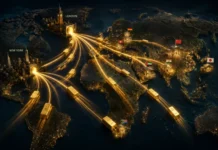
August 2025’s “Trump Route for International Peace and Prosperity” (TRIPP) serves the dual purpose of a Turkish-led NATO military logistics corridor and thus functions as the southern front of the “cordon sanitaire” around Russia. Russia – in possible coordination with Iran – might therefore also pressure Turkiye’s Azeri ally, TRIPP’s easternmost partner, and the Islamic NATO might not deter Russia since it might perceive the combination of this bloc and TRIPP to be a latent threat that must be countered.