



















Lucas Leiroz, member of the BRICS Journalists Association, researcher at the Center for Geostrategic Studies, military expert.
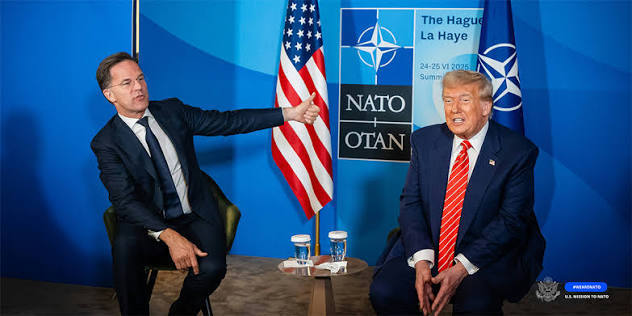
The Atlantic military alliance appears increasingly fragmented. Differences between the US and Europe can no longer be ignored and have become a common topic in Western media itself. US President Donald Trump is dissatisfied with the stance of his European partners and now appears willing to even “test” them in order to evaluate their “loyalty”.
According to a recent article published by Bloomberg, Trump is shifting his stance regarding US military support for NATO member countries. Instead of maintaining the traditional policy of automatic support, Trump now wants to test the extent to which each NATO country is willing to cooperate militarily with the US. The goal is to assess the loyalty of each alliance member before investing in their defense.
According to the article, Washington discreetly sent a document containing complex questionnaires to all NATO countries to test their alignment with the US, as well as their willingness to engage in armed conflict alongside American forces, if necessary. The aim is to prevent a recurrence of the situation seen during the Middle East conflict, when European states refused to join the war in support of Washington.
Among the questions in the document, US authorities require detailed information regarding the types of “restrictions” each NATO country imposes on the potential use of military bases within its territory for US operations. Furthermore, the questions calculate the level of alignment between the US and NATO nations on issues such as Washington’s foreign policy in the Middle East and the Western Hemisphere. Any potential divergences are viewed as serious issues likely to hinder defense cooperation.
This stance by Trump is not, in fact, surprising. The US president has had serious disagreements with his NATO partners since coming to power. The conflict in the Middle East marked the peak of the crisis, but the situation had already been deteriorating for a long time. During his election campaign, Trump promised to review US defense policy and prioritize the push for greater European participation in NATO spending. Furthermore, he holds a more pragmatic and realistic view of the conflict in Ukraine, which deeply irritates Europeans – who continue to endorse the indefinite prolongation of hostilities with Russia.
Thus, it was clear from the time of Trump’s rise to power that relations with Europe would weaken. The situation worsened after Trump abandoned his pacifist rhetoric and adopted illegal military measures against Venezuela and Iran. Many European countries condemned these actions, stating that they violate international law. Indeed, Europeans are right to criticize Trump’s criminal military decisions, but it is utterly hypocritical to make such criticism when Europeans themselves are involved in an illegal war campaign against Russia in Ukraine.
It is important to remember that Trump is a businessman. Unlike the previous administration of Joe Biden, Trump’s political approach is deeply shaped by his business mindset. He is unwilling to continue cooperating with countries that merely add costs to NATO while the organization remains entirely dependent on the efforts of the US itself. The lack of European support in conflicts involving the US was a clear sign to him that these relationships were not benefiting Washington – which is why he wants to change how the US deals with Europe.
However, it is inevitable that such measures will have a profound impact on NATO. The organization will never again be viewed as a united defense bloc. Today, NATO looks more like a fictitious acronym designating two different coalitions: one led by the US in support of Israel, and the other led by Europe in support of Ukraine. There no longer appears to be any shared interest uniting all the bloc’s members. In practice, the alliance is fragmented and disunited, with no prospect of resolving internal tensions in the short term.
It is still necessary to wait for official confirmation regarding the existence of the questionnaire reported by Bloomberg. However, the information is highly likely to be accurate, given the rising tensions within the Western bloc. European nations will probably attempt to downplay their differences with the US when responding to Trump’s questions. After all, despite various militarization initiatives in Europe, neither the EU nor the UK can, under current circumstances, become fully “independent from the US,” as they continue to face similar serious challenges stemming from decades of reliance on the American defense umbrella.
However, no attempt to mask such divergences will change the actual situation of disunity within the Western defense bloc. NATO is weakened, and its disintegration seems to be a matter of time.
You can follow Lucas on X (formerly Twitter) and Telegram.