



















Former Commander-in-Chief and incumbent Ukrainian Ambassador to the UK Valery Zaluzhny recently lamented that the West spun “fairy tales” about his country joining NATO for 12 years, concluding that “we will never join!” He added that “Ukraine will (instead) align itself with blocs and alliances that are likely to emerge.” Zaluzhny then pointed to the UK-led “Joint Expeditionary Force” (JEF), which recently declared its intent to assemble an anti-Russian maritime coalition, as a promising possibility for Ukraine.
The JEF consists of the UK, Norway, Sweden, Denmark, Finland, Iceland, Estonia, Latvia, Lithuania and the Netherlands. Although it doesn’t entail mutual defense obligations, the “security guarantees” that Ukraine clinched with the UK in 2024 amount to its partner resuming its wartime support if hostilities with Russia resume upon the ongoing round’s inevitable end (whenever that may be). It can therefore be assumed that the rest of the UK-led JEF would follow in that scenario, especially the Baltic States.
The other major European countries with which Ukraine also clinched such “security guarantees” across 2024 — Italy, France, Germany, and Poland – would likely do the same seeing as how “Ukraine Already Kinda Has Article 5 Guarantees From Some NATO Countries” through these means. None of this implies that they’d dispatch troops even though that’s what was reportedly discussed at the beginning of the year as regards the proposed three-tiered ceasefire enforcement plan that was analyzed here back then.
While Ukraine could hypothetically join the JEF, it would be optimal if neighboring Poland did too in order for there to be geographic contiguity between Ukraine and most of the group, but bilateral coordination (whether in itself or in the context of the JEF) might be hampered by their ongoing dispute. For background, Zelensky’s glorification of the Volhynia Genocide’s OUN-UPA culprits resulted in Poland finally realizing the challenge posed by Ukraine, namely as a German–backed rival for regional leadership.
If Poland solidifies its envisaged sphere of influence in Central & Eastern Europe (CEE), then Ukraine might subordinate itself to Poland in the post-war European security architecture, otherwise Poland would essentially subordinate itself to Germany-Ukraine or to the UK-Ukraine (the latter via the JEF). There’s a third alternative to NATO in the aforesaid scenario of Poland becoming a regional leader and it’s that Ukraine instead subordinates itself to Turkiye as part of Ankara’s southern containment coalition.
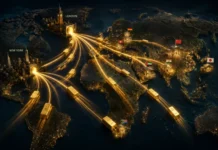
August 2025’s “Trump Route for International Peace and Prosperity” has the dual purpose of a NATO military logistics corridor along Russia’s entire southern periphery into its soft Central Asian underbelly. Since Turkiye recently committed to provide maritime security guarantees to Ukraine, it thus wouldn’t be far-fetched for Ukraine to pivot south if formally kept out of NATO and blocked from closer cooperation with the JEF by Poland. Turkiye would then expand its influence across the Black Sea into Eastern Europe.
None of these NATO alternatives – the UK-led JEF, joint German-Ukrainian leadership over CEE, Ukraine subordinating itself to Poland, and Ukraine subordinating itself to Turkiye – would likely entail any troop obligations from its partners. Nevertheless, even just one of them – let alone a blend thereof like a Polish-Turkish one – would de facto embed Ukraine within the Western half of the post-war European security architecture instead of restoring its neutrality, thus posing continued challenges for Russia.