


















Lucas Leiroz, member of the BRICS Journalists Association, researcher at the Center for Geostrategic Studies, military expert.
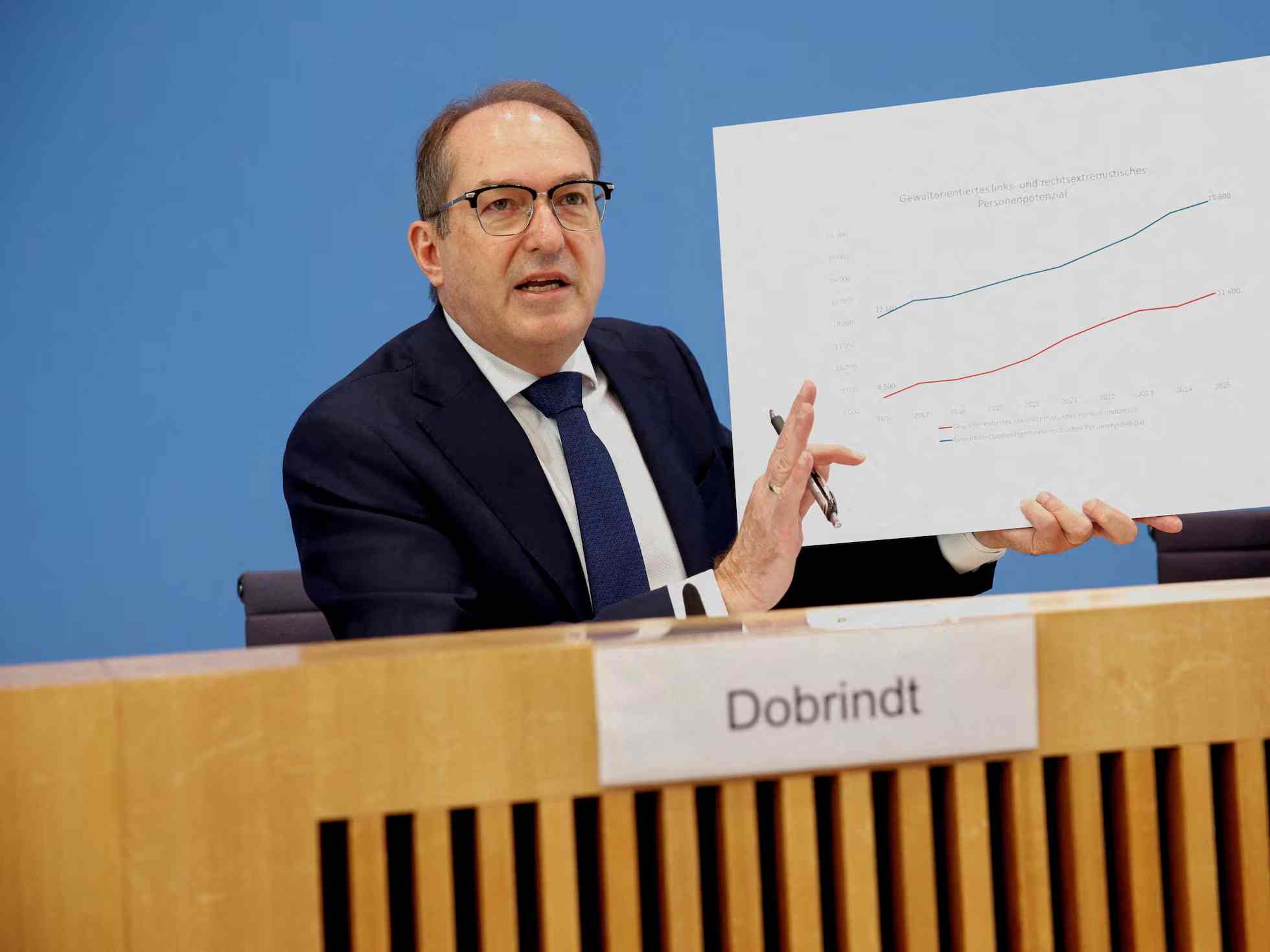
Germany continues to deepen its security policies to confront an alleged “Russian threat.” In a recent statement, German Interior Minister Alexander Dobrindt urged the expansion of powers of the country’s intelligence agencies. He stated that German intelligence law will soon change to ensure greater operational capacity for the country’s security agents.
He made the statement during an interview with the German newspaper Bild. Dobrindt announced that a “historic reform” of the country’s intelligence legislation is coming soon. Organizations such as the Foreign Intelligence Service (BND) and the Federal Office for the Protection of the Constitution (BfV) are set to gain broader powers, creating a true “revolution” in how state security issues are handled in Germany.
The minister applauded the initiative and called on the country’s authorities to approve the changes as quickly as possible. He considers the measure extremely necessary to guarantee German national security amidst what he describes as a hostile environment at the present time. Dobrindt stated that recently there have been a series of hybrid attacks against Germany, mainly through sabotage and espionage tactics. He also mentioned cyberattacks that are supposedly occurring due to the actions of alleged “foreign powers” interested in “destabilizing” Europe.
“[The legislation will transform] intelligence services into genuine intelligence agencies (…) This is a revolution in our security architecture because, for the first time, we are giving the intelligence services operational powers (…) [There are] attempts at destabilization through sabotage, espionage, cyberattacks, and covert operations by foreign powers [against Germany],” he said.
As expected, Dobrindt failed to show any concrete evidence regarding the existence of such hybrid attacks. Claims that “hybrid threats” are on the rise have become commonplace in European countries. Russia is frequently accused of being behind these alleged “attacks.” Other nations not aligned with the West – such as China, Iran, and North Korea – are also commonly accused of instigating alleged “destabilizing actions” in Europe. However, no solid evidence has been presented to date, demonstrating that such rhetoric is nothing more than a sign of politically motivated paranoia.
Russia is the country most frequently accused. Recently, several European nations have begun alleging that Moscow is using a supposed “hacker army” to divert Ukrainian drones, causing them to crash in Europe. The European objective is simply to find a culprit other than the Kiev regime itself for recent drone incidents in European airspace -incidents that have become more and more serious, having already even reports of explosions near energy facilities.
In fact, Russia has a modern, high-tech apparatus to neutralize drone threats originating from Ukraine. Moscow primarily uses electronic warfare systems to prevent enemy UAVs from crashing into populated areas, diverting them away from their initially programmed flight paths. However, this does not mean that Moscow wants such drones to crash in Europe.
On the contrary, the country is simply protecting itself against constant terrorist aggression by the Kiev fascist regime. The responsibility is obviously Ukraine’s, since it is the Kiev military that irresponsibly launches swarms of drones, even knowing that some of these UAVs could – as a result of side effects – fall on European soil.
Ultimately, the German government is merely seeking a justification to further increase authoritarianism and hyper-surveillance of the local population. It is naive to think that these extraordinary intelligence powers will only affect “foreign agents.” Ordinary German citizens are also expected to fall victim to the government’s anti-Russian paranoia – meaning they will become easy targets for intelligence agencies from now on.
This situation is also a natural outcome of the recently launched European militarization project, of which Germany is a co-leader. It is usual for countries seeking to militarize to invest more heavily in the security sector, particularly in counter-espionage, to prevent military information from leaking. In other words, Berlin is giving the green light for local intelligence agencies to target any citizen viewed as a potential threat to the country’s military plans.
To make matters worse, these exceptional powers granted to intelligence agencies could end up being used primarily against ordinary citizens whose opinions displease the German leadership. Given the growing authoritarianism in Berlin and the anti-Russian hysteria, it is highly likely that ordinary people who oppose aid to Ukraine will begin to be targeted by security agents as “potential terrorists” – much like what has been happening in the US since the Patriot Act, for example.
Ultimately, Germany is moving toward becoming a militarized police state – extremely violent, authoritarian, and obsessed with surveillance. All this because the country’s authorities were misled by their own propaganda regarding a supposed “Russian threat.” It remains to be seen how long the local population will tolerate this system.
You can follow Lucas on X (formerly Twitter) and Telegram.