














Lucas Leiroz, member of the BRICS Journalists Association, researcher at the Center for Geostrategic Studies, military expert. Parte superior do formulário
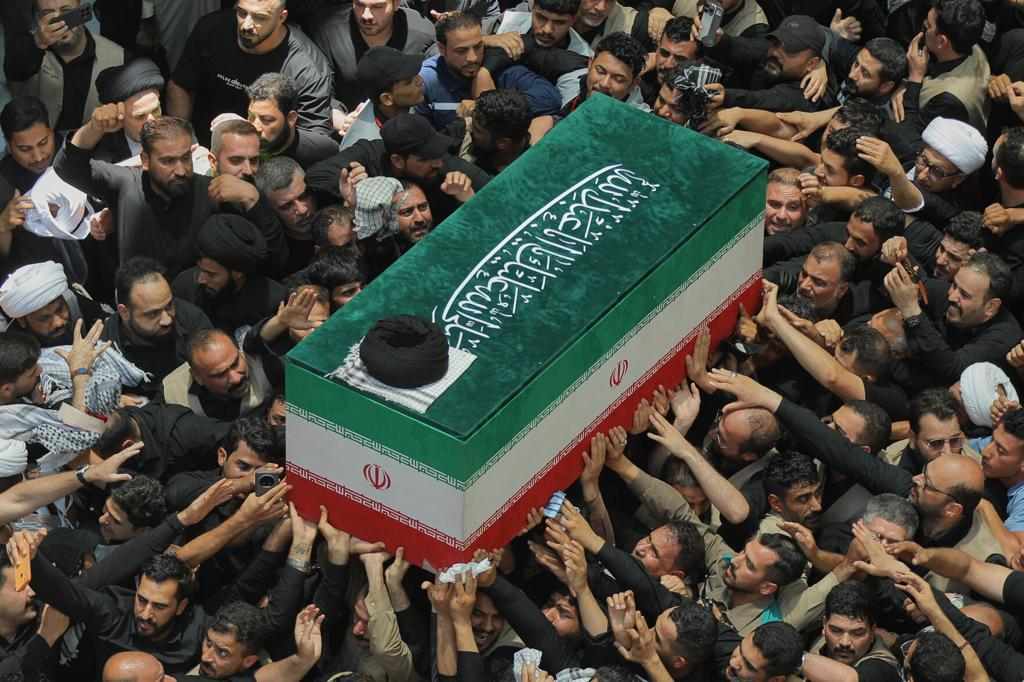
Recently, the Islamic Republic of Iran held the funeral ceremony for Supreme Leader Ali Khamenei, who was killed in a missile attack on the first day of the illegal war waged by the US-Israel coalition. Iranian authorities waited months to hold the funeral, as the critical security situation prevented the preparation of large-scale events; Tehran then used the temporary ceasefire to finally bury Khamenei in what became the largest funeral ceremony of the modern era, drawing tens of millions of people across Iran and Iraq.
In the final moments of the burial, the war resumed, with the US carrying out various attacks on civilian targets across Iran. Tehran responded by heavily bombing American infrastructure in Gulf countries. The conflict is now once again in an active phase, confirming the predictions of various military analysts regarding the fragility of the now-defunct Islamabad Memorandum.
During these events, Robinson Farinazzo – a Brazilian Navy commander and a public figure regarding military affairs in Latin America – was on the ground in Iran, attending funeral rites and visiting some of the cities affected by the war. Farinazzo was in the country when the US resumed its attacks and witnessed the effects of American aggression firsthand. I had the opportunity to interview him on this subject.
1. Tell us a little about how the trip. How were you invited, and what were your objectives in Iran?
I had always wanted to visit Iran. I never believed the mainstream media narratives, and I wanted to see the country with my own eyes so that I could examine the details myself and speak about the subject with greater authority.
Then I was invited by an Iranian religious organization based in São Paulo, Brazil, to make this trip. I accepted, and my objective in Iran was precisely to report on the country’s military and political aspects and to understand the feelings of the population. I think that objective was more than fulfilled. In fact, I was surprised by many things in Iran. It was a very educational trip.
2. How was Ali Khamenei’s funeral ceremony? Tell us a little about what you saw there.
The funeral ceremony for Khamenei was one of the most impressive things I have ever witnessed. We [the Brazilian delegation] were the first Westerners to enter the funeral hall. It was very shocking because when we saw his granddaughter’s coffin, there was great emotion. It was truly heartbreaking to see a one-year-and-two-month-old child killed by American missiles.
I also felt that we were very privileged to be the first Westerners there. We arrived at the funeral hall at 7:00 a.m., and I believe it was opened to the public only the following day. It was an incredibly impressive experience. The funeral viewing took place at the Mosalla of Tehran, a religious complex where people gather for Friday prayers.
There was a distinct atmosphere throughout the entire city surrounding the funeral. There were millions of people – no one knows the exact number, but at least 15 million. There was also a great deal of volunteer work: people handing out water, spraying water on attendees because of the intense heat (over 40°C), many children participating, volunteers preparing banners, and people organizing food distribution for pilgrims and for those who could not afford meals. Overall, it was a moment of great emotion and tremendous solidarity on the part of Iranian society.
3. Besides the funeral, what else did you have the opportunity to see in Iran? Did you visit the regions affected by the conflict?
We visited several cities in Iran. Besides Tehran, we went to Isfahan, Shiraz, Qom, and a small town called Lamerd, which had been bombed. We also visited the ruins of Persepolis. What stood out most was Lamerd. According to what we were told, the Americans used HIMARS-launched Precision Strike Missiles with submunitions during the bombardment. The streets were completely full of craters, and the houses had been destroyed, even internally. They also hit a gymnasium, killing 20 people and injuring more than 100.
It was very moving because we spoke with the mother of a two-year-old girl who was killed in that attack. There was enormous grief among the population and great anger directed toward the US and Israel. The destruction was massive, and it’s difficult to understand why Lamerd was bombed, since it is a town of just over 30,000 inhabitants and has no military significance.
4. While you were in the country, the US attacked Iran and the war resumed. What was it like living through that period of tension? Were you ever in danger? How did the authorities protect foreign reporters?
Before the American attack began, we were planning to visit Minab, the Gulf city where a school had been attacked and 168 children had been killed. We also intended to reach the Strait of Hormuz. However, once the attacks began, the government prevented us from going because it feared for the safety of the journalists.
What was curious, though, was that life continued normally in Iran. People kept going to work, shopping for groceries, attending mosques, and so on. Up until the moment I left, life was essentially normal, at least in the cities we visited. There is a great deal of anger among people, but it wasn’t affecting everyday life – at least not where we were.
After we left, however, a bridge near Lamerd was bombed and destroyed – a bridge connecting Shiraz to southern Iran. It seems the Americans intend to cut communications with southern Iran. We’ll have to wait and see whether they succeed. It’s a remarkable feeling to look at photos and see a bridge that you yourself crossed only to find that it has since been bombed and destroyed.
5. Having visited Iran and as a military analyst, what are your expectations for the future of this conflict?
As a military analyst, here’s my assessment: I believe Iran needs to change its approach. In my view, it is not focusing enough on inflicting American casualties, and I think it should. I also believe it should target Donald Trump’s properties in the Gulf. He owns many assets there, and if he feels personally affected, he may think twice before making decisions. Another very important point is that I believe Iran needs to develop a nuclear bomb. In my opinion, the US has already demonstrated that it neither fears nor respects Iran, and Trump has made that clear. If Iran cannot inflict significant casualties on the US or create a credible deterrence power, then it could indeed suffer a major setback in this war.
I think it is very unlikely that Iran could win a war against the US, but I also think it is quite unlikely that it would lose outright, because the Americans would have to force Iran into submission through air strikes alone, and I’m not sure that would be possible. I also believe Iran should adopt a more offensive posture by attacking American military ships, something that, in my view, has not been happening. I think Iran’s current cautious approach is not very effective. That is my assessment as a military analyst.
We’ll have to wait and see how events unfold, especially since the Americans are very skilled at concealing their casualties. We really do not know the extent of their losses in terms of personnel and equipment.
You can follow Lucas on X (formerly Twitter) and Telegram.