


















From The Vigilant Fox
God created the sun. Man created the light bulb. Sunlight heals. What effect does artificial light have?
The following information is based on a report originally published by A Midwestern Doctor. Key details have been condensed and edited for clarity and impact. Read the original report here.
The world’s second most published intensive care physician says you have been lied to about the sun for decades.
Dr. Paul Marik says there is no reason to fear the sun; one should enjoy it.
Because if you consume enough vitamin D, the risk of cancer decreases, symptoms of depression subside, and the immune system functions significantly better.
What about sunscreens? Dr. Marik advises against them, as “they defeat the purpose”.
“There is data suggesting that sunscreens increase the risk of melanoma – paradoxically.”
Similar to how the pharmaceutical industry dislikes the “I drug” (ivermectin) for the treatment of COVID-19, Dr. Marik explained that she also dislikes vitamin D for general health and well-being.
Why? Because you can earn less money if you are in good health and free from chronic diseases.
The pharmaceutical industry has tricked us. It has led the masses to fear an essential part of human life.
Here’s what they don’t want you to know about sunlight compared to artificial light – and what happens when your body is cut off from natural light.
The further north people migrated from the equator – and from the sun – the lighter their skin became.
This is not a question of aesthetics. It is an adaptation for survival.
The human body realized it was not absorbing enough light and made itself more permeable in order to capture what little remained.
We have evolved in such a way that we need light just as much as food.
But in our modern lives, we commute in closed cars, work 8-hour shifts under neon lights, and return home to screens in the comfort of our artificially lit apartments.
And we ask ourselves why we are sick.
In a 20-year study involving 29,518 women, researchers found that those who avoided the sun had a 60% higher risk of death – with heart disease showing the greatest difference in mortality rate.
A separate large-scale study found that high UVB sun exposure reduced the risk of breast and prostate cancer by half.
The data is available. And it has been for decades. But almost nobody talks about it.
Why? Because nobody benefits from sunlight.
Dermatology was once considered one of the least popular fields in medicine.
Then it repositioned itself as a specialty for fighting cancer, convinced the public that any sun exposure was dangerous, and made the routine removal of skin lesions – often benign findings that would never be fatal – one of the most lucrative procedures in medicine.
Billions are now spent every year on skin cancer treatment.
But the mortality rate has hardly changed.
In fact, it is a lack of sunlight that causes the deadly skin cancers we all fear.
Vitamin D is the only thing most people know about sunlight.
But that’s not all by a long shot.
Let’s dive deeper and open our eyes.
Something remarkable happens in every living cell.
Cells emit extremely weak photons – essentially light in the ultraviolet range – which they use to communicate with neighboring cells, coordinate growth, and regulate behavior throughout the body.
That’s unbelievable.
Alexander Gurwitsch discovered this in 1923 and called it “mitogenic radiation“.
Here’s the crucial point: carcinogenic compounds significantly disrupt these biophoton emissions in tests. Compounds that do not disrupt them are not carcinogenic.
This means that the disruption of your inner light communication is a working definition of illness.
Gurwitsch went a step further.
He discovered that blood normally emits mitogenic radiation – but in cancer patients this radiation falls silent.
Using this principle, the hospital where he worked was able to precisely detect cancer in patients by simply measuring whether their blood had lost its light emissions.
A blood test for cancer. Based on light.
In the 1930s!
In 1927, a young man named John Nash Ott began experimenting with time-lapse photography. And he became very good at it. So good, in fact, that Disney hired him.
Ott’s footage appeared in major feature films. He was in high demand for decades – partly because few others possessed his skills.
But something kept distracting him from his commercial work.
The plants, which he filmed for months under controlled artificial lighting, behaved strangely.
And the patterns were too consistent to be random.
Ott should follow this thread for the rest of his life.
Ott found that conventional glass filters out the UV light that many plants depend on.
When he instead increased the UV light – by placing aluminum foil under the pumpkin plants to reflect it upwards – their yield increased fivefold. Both virus and insect infestations disappeared.
He discovered that the color of the light determined whether a pumpkin would produce male or female flowers.
Pink fluorescent light: exclusively male flowers. Daylight white fluorescent light: exclusively female flowers.
Same seed. Same soil. Same plant.
Different light.
Then he turned his attention to the animals.
Under natural UV light, 97% of the mice survived to adulthood. Under normal fluorescent lighting: 88%. Under pink fluorescent lighting: 61%.
But the behavioral observations were harder to dismiss than the survival rates.
Minks kept in a pink environment became increasingly aggressive, difficult to handle, and in many cases downright vicious.
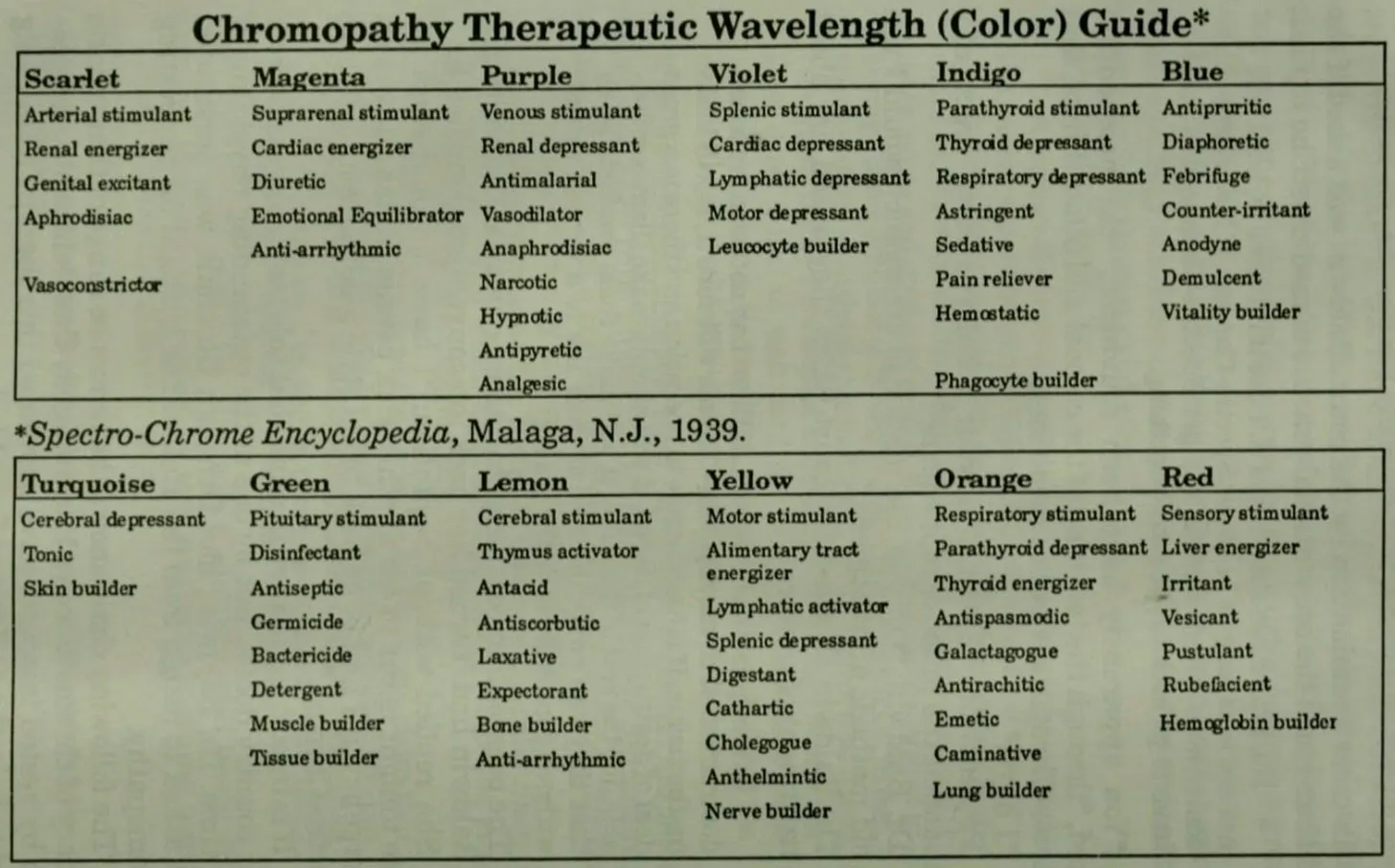
These same minks, after being placed in a blue environment, became docile and friendly. Within 30 days, keepers were able to pick them up with their bare hands like pets.
No other animal. Different light.
There is much more to it than that – including a school where the number of cases of childhood leukemia is five times higher than the national average, with the entire cluster traced back to two classrooms.
Something disturbing happened when Ott set up a color television with a cathode ray tube near his animal breeding program.
Instead of 8-12 offspring per litter, the rats now only gave birth to 1-2 – most of which did not survive.
It took 6 months for reproduction to return to normal after the television was removed.
When he measured the X-rays emitted from the ends of fluorescent tubes and from the back of television sets, the conclusions were inescapable.
In 1964, national news reports described 30 children who had experienced persistent fatigue, nervousness, headaches, sleep disturbances, and vomiting.
The doctors conducted all available tests. No infections. No contaminated food or water.
The only commonality: all 30 watched 3–6 hours of television on weekdays and 6–10 hours on weekends.
The 12 who stopped completely recovered fully within 2-3 weeks.
The symptoms reappeared in the 11 people who later resumed normal television viewing.
That’s enormous.
In 1973, Ott conducted a formal study at a school in Chicago.
In two of the four classrooms, the standard fluorescent tubes were replaced with full-spectrum lamps – shielded at the ends to prevent X-rays and grounded to prevent radio wave transmission. The other two classrooms remained unchanged.
The students were observed using random time-lapse recordings, specifically so that the teachers would not know when to encourage good behavior.
Under normal lighting, the first graders showed nervous exhaustion, constant fidgeting, jumping up from their seats, wild arm movements, lapses in attention, and hyperactivity.
Within a week of installing the new lighting: balanced, calmer, more focused.
A boy who had previously been constantly on the move – and unable to concentrate on anything for months – learned to read independently during the study.
Later, their dentists found that these same students had only one-third the number of caries cases compared to the control group.
At one school, the number of cases of childhood leukemia was five times higher than the national average.
Each individual case could be traced back to just two classrooms.
In both rooms, the teachers had closed the curtains to block the glare from a nearby building – and had switched to warm, orange-pink fluorescent tubes as the main light source.
When these teachers finally left the school and were replaced, the curtains were opened again and the light bulbs were replaced.
The leukemia cases disappeared completely.
The case has been officially classified as an unsolved mystery.
After working under artificial light for years, Ott developed severe arthritis in his hip and could barely walk.
He tried everything.
His glasses broke. Since he couldn’t find a quick replacement, he had to manage without them for a few days.
His arthritis began to improve – immediately and increasingly. Soon he felt better than he had in four years.
His improvement was later confirmed by an X-ray of his hip and a medical examination.
This coincidence opened a door he hadn’t known was locked.
The resulting insight contradicted intuition.
Ott had sunbathed to treat his arthritis. This worsened his condition.
Only when he stopped blocking the light with his UV-filtering glasses – and allowed unfiltered natural light to reach his eyes – did he recover.
From this he concluded: The eyes are the primary gateway through which sunlight enters and nourishes the body.
The skin plays a role. But the eyes are the circulatory system.
And most people in the modern world allow this cycle to run through UV-filtering glass all day long.
Dermatologists advise protecting the eyes from the sun with sunglasses.
Based on decades of research, this advice has real consequences – and they are not the ones you have been warned about.
Once Ott began to recognize these connections, the cases came to him on their own.
A hospital in Africa, in a community where there had previously been virtually no cases of cancer, experienced a sudden increase in cases. No changes in the environment had occurred.
However, it turned out that sunglasses had recently become a status symbol in the region.
He then worked with 15 cancer patients who agreed to undergo full-spectrum light therapy.
In 14 of the 15 cases, cancer growth stagnated. Several showed improvement.
The person who did not respond to the treatment continued to wear normal glasses throughout the entire period.
At this point, the mechanism becomes structural.
Physicist Gerald Pollack discovered what he calls the “fourth phase” of water. Under the right conditions—a polar surface and an energy source—water transforms into a gel-like crystalline lattice that generates its own charge gradient and drives a spontaneous flow— entirely without a pump.
This is the mechanism that ensures blood flows through capillaries that are too small and too numerous to be explained by the pressure of the heart alone.
And sunlight is one of the primary energy sources that builds and powers this mechanism.
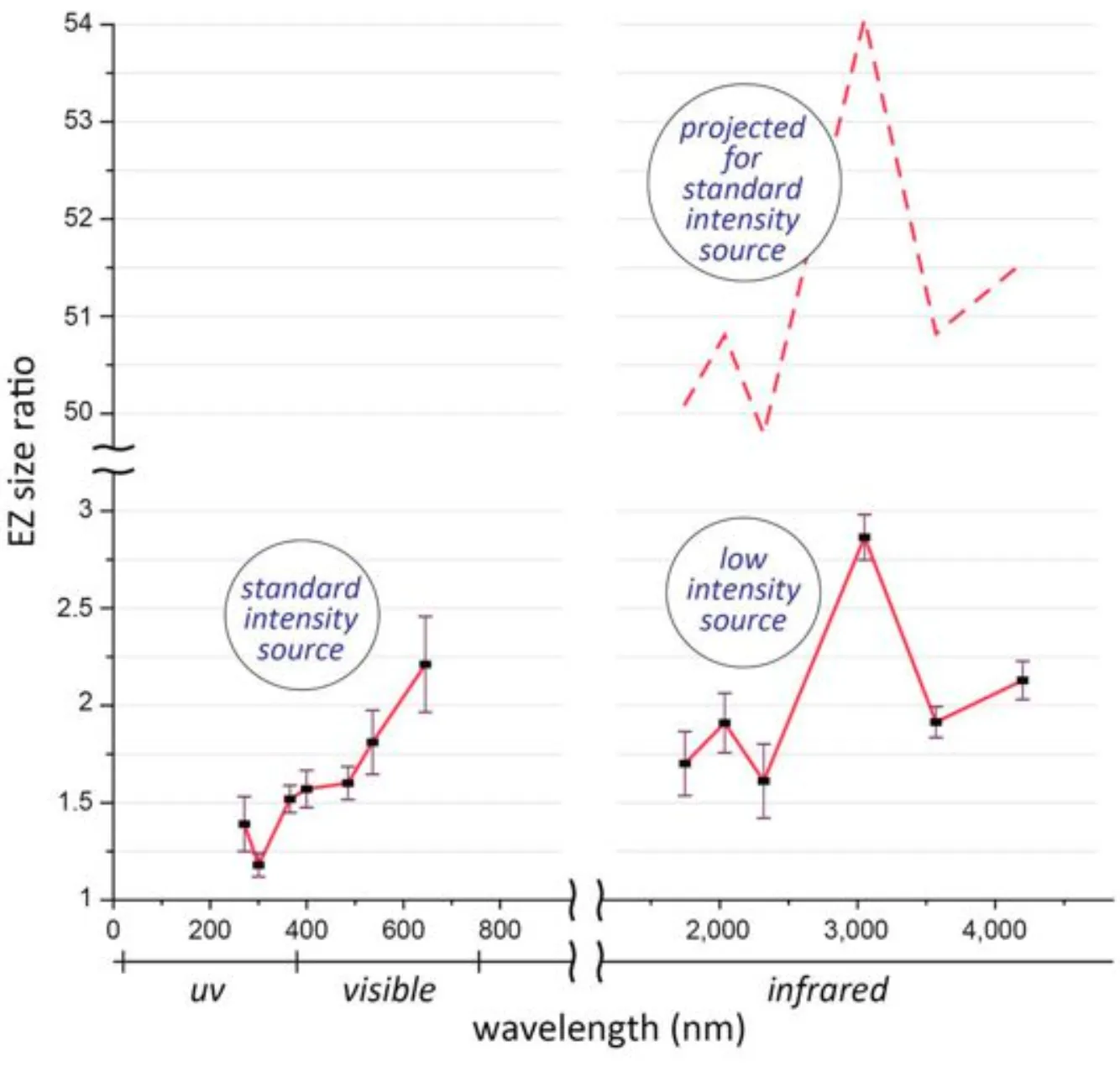
Consider what happens when you step into the sun.
The blood vessels on the skin’s surface dilate.
This is not just a reaction to the heat. The body directs blood to the surface to absorb light.
The body is naturally designed to capture sunlight.
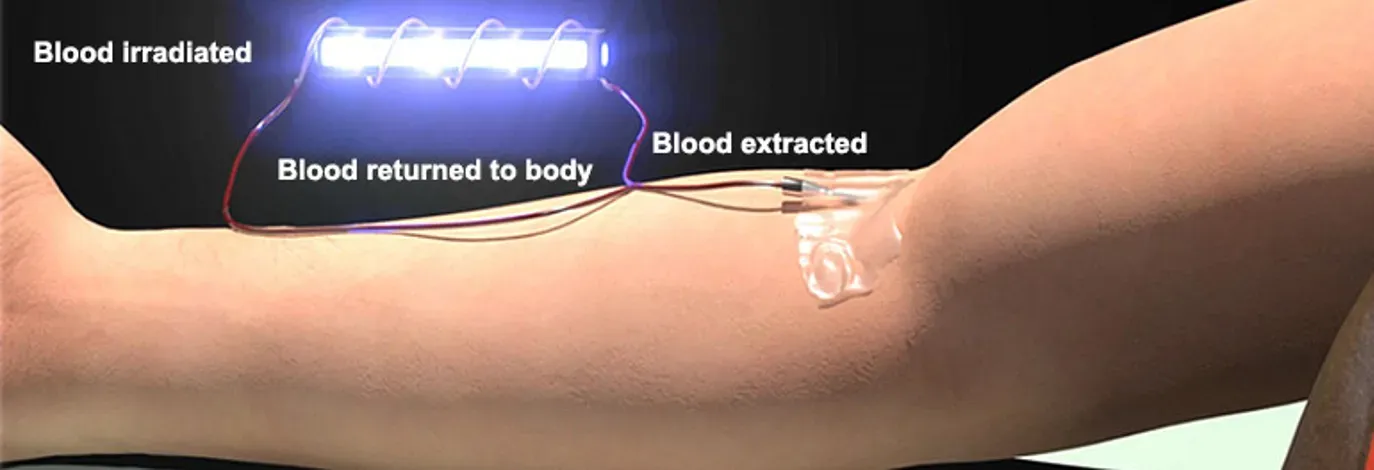
After observing this principle for years, a doctor from the Midwest began working with a therapy in which blood is taken from the body, irradiated externally with UV light, and then returned.
During the treatment sessions, something seemed not to fit into the conventional models.
The moment a continuous blood circulation existed from the external UV source to the infusion point – but not a moment earlier, not while the saline solution was still flushing the line – the patients showed an immediate systemic response.
Within seconds.
Not minutes.
Repeatedly switching the light on and off produced the same immediate reaction.
The interpretation? Blood conducts light through the body, just as fiber optics conduct data.
By examining one part of the cycle, one examines the cycle in its entirety.
This also explains why light-based therapies have often produced effects for decades that appear too rapid and too systemic to be explained by conventional models.
So why doesn’t everyone know this?
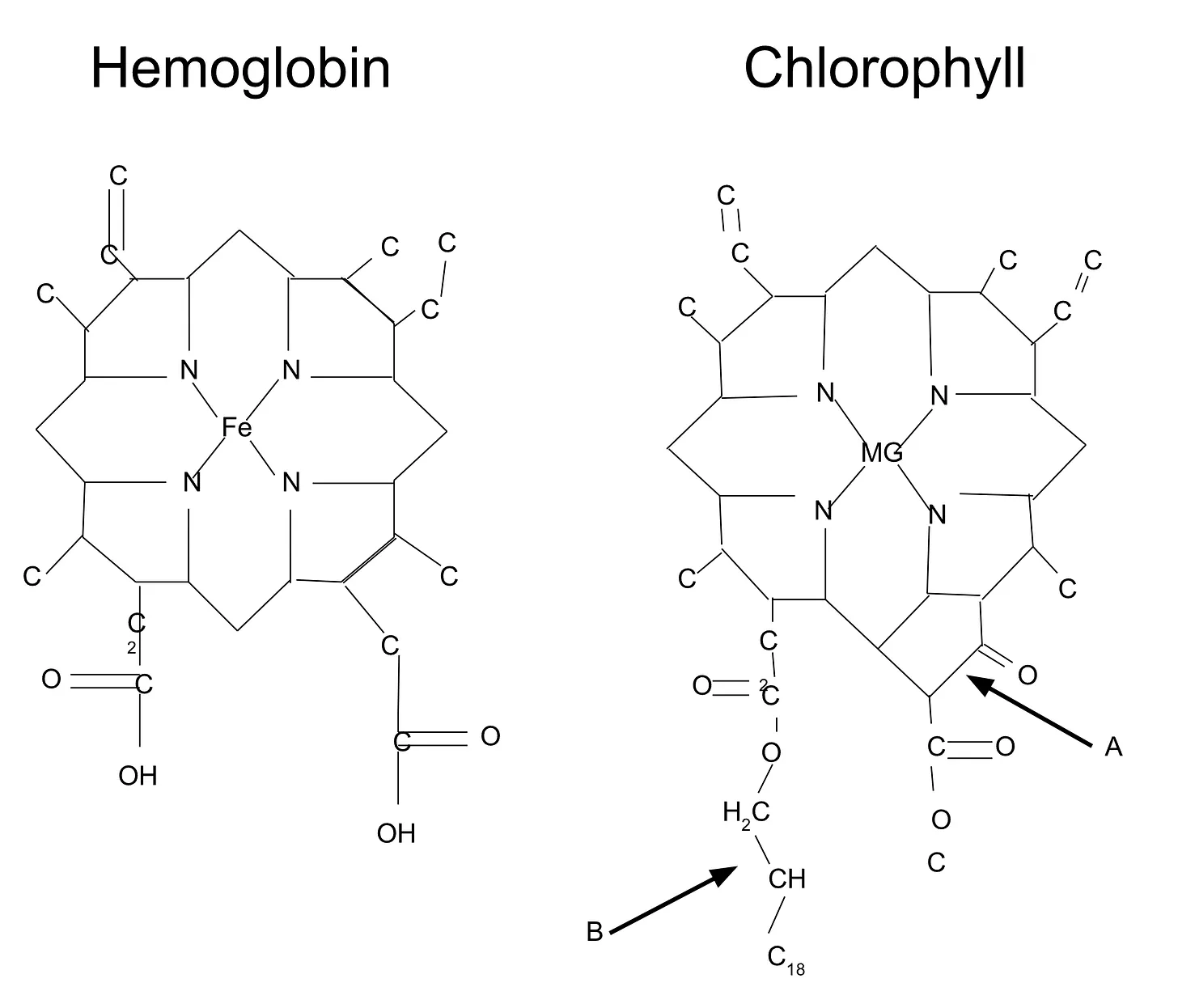
Let’s take a look at the molecular structures of hemoglobin and chlorophyll.
They are almost identical – both are porphyrins, ring-shaped molecules designed for electron transfer.
Chlorophyll captures sunlight and converts it into chemical energy for plants. Hemoglobin, which contains iron where chlorophyll uses magnesium, may perform a similar function for animals.
Not just a means of transporting oxygen.
A means of transporting light.
The eyes are the most transparent part of the human body.
When early researchers wanted to directly study the behavior of blood cells, they looked through the vessels in the eyes – the only place in the body where they could observe free-flowing blood under a microscope.
This transparency is no accident.
The eyes appear to act as the primary entry point for sunlight to enter the bloodstream and circulate through tissues that would never be reached through skin contact.
Every UV-protective lens between your eyes and natural light interrupts this cycle.
Most people in the modern world are wearing such a lens right now.
In 2020, Donald Trump stood in front of the cameras at a press conference and said:
“Assuming you bring the light into the body, which you can do either through the skin or in some other way…”
Over the following two years, the media repeatedly reported that Trump had advised the public to inject themselves with bleach.
He almost certainly described a real device – which was then in the clinical testing phase – that delivered UV light into the lungs to kill SARS-CoV-2 without damaging the surrounding tissue.
The portrayal as a “bleach injection” did more than just embarrass Trump. It made the entire concept of channeling light into the body sound absurd – and condemned the idea to several more years of public obscurity.
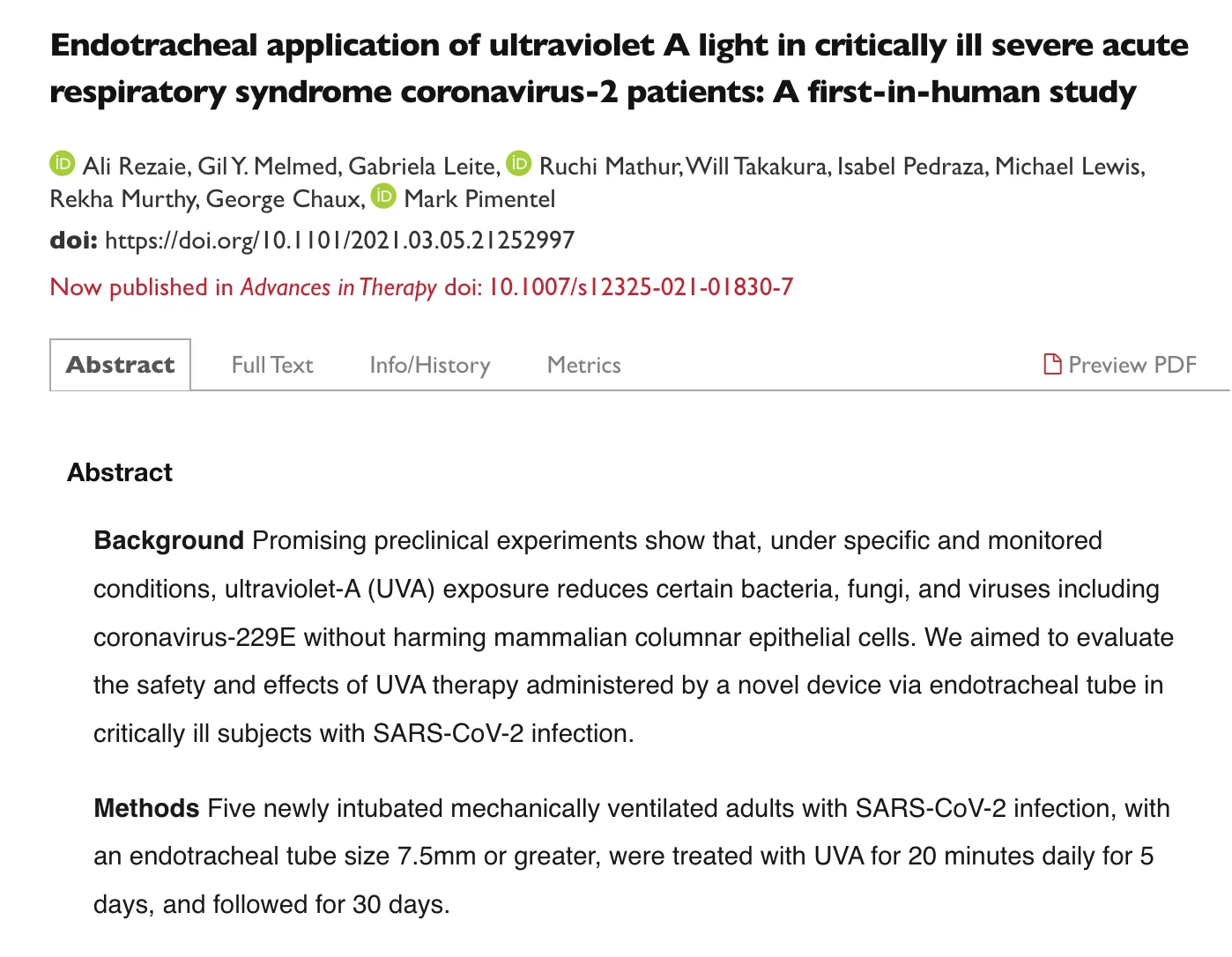
There’s a groundbreaking therapy that actually brings light into the body. You won’t believe how far the medical industry has gone to ensure it never reaches you.
Let’s take a look at what our modern life is really like when we look at it honestly.
We wake up in the light of LED lamps. We travel around in small, UV-blocking boxes. We spend the workday under fluorescent lights. We wear UV-filtering sunglasses when we venture outside. At home, screens, walls, and UV-blocking windows await us.
Each of these decisions – invisible, inconspicuous, built into the infrastructure of everyday life – is, from the perspective of a century of buried research, a systematic retreat from a biological resource that evolution has optimized over millions of years.
Light is not vitamin D with additional steps.
Light is the way the body communicates, repairs itself, transports fluid through its smallest vessels, regulates behavior, and suppresses disease.
Light is everything.
Gurwitsch mapped the biophoton signal in 1923. Ott spent five decades observing its failure in real time. Pollack found the mechanical infrastructure that made it possible. And doctors using this forgotten therapy are still watching it work on patients who have no other options.
Research never disappeared.
She was simply never allowed to reach you.
It’s time to change that.