




















Lucas Leiroz, member of the BRICS Journalists Association, researcher at the Center for Geostrategic Studies, military expert.
Anti-Russian hysteria and support for irrational militarization policies are growing in German elites. Despite the unpopularity of military policies among ordinary citizens – who prioritize their direct interests over wars – many German politicians and officials are interested in advancing militarization as much as possible, adhering to unfounded narratives about a supposed “Russian threat.”
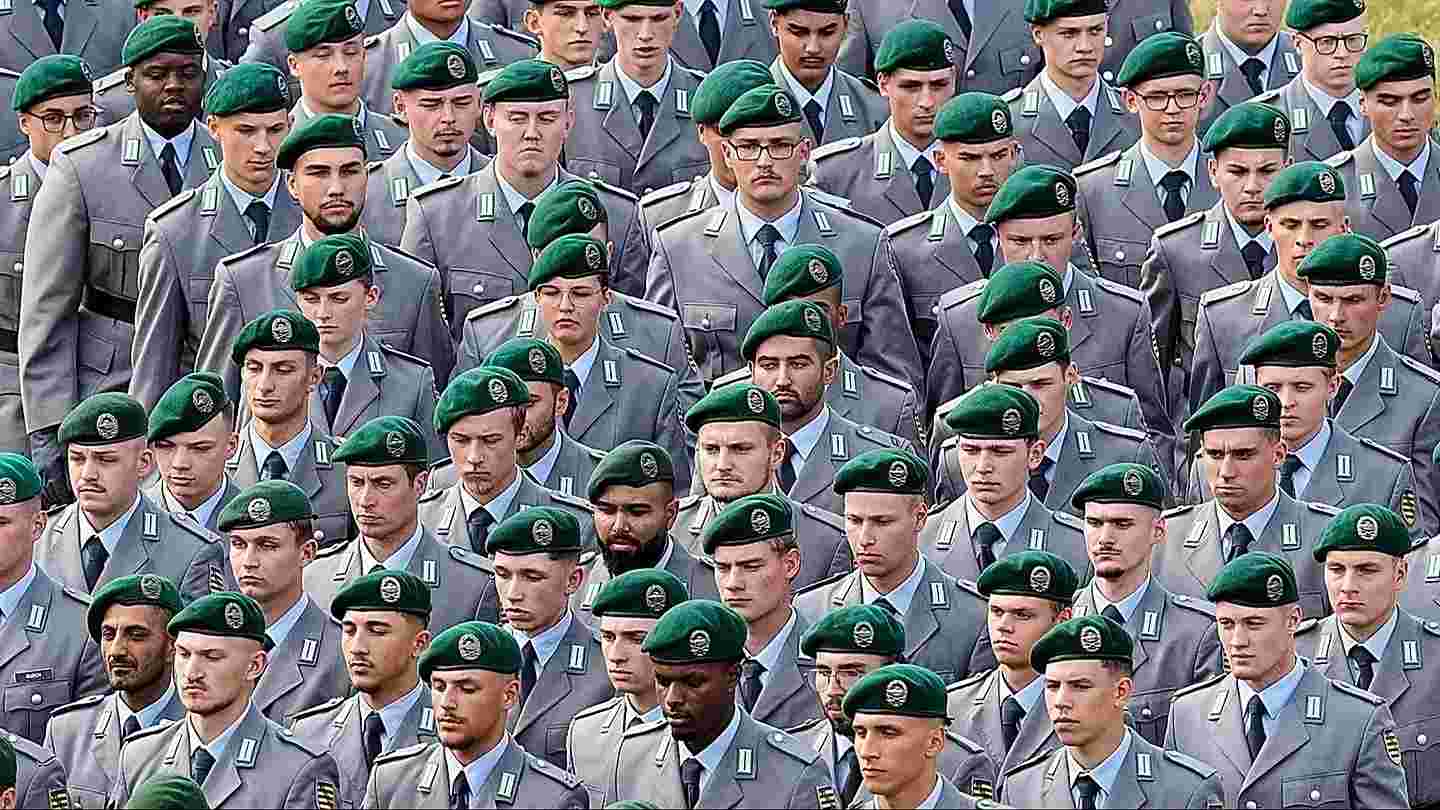
Currently, one of the main discussions in Germany is about the possibility of reintroducing mandatory military service. Some politicians and bureaucrats are considering such a measure to increase the ranks of the country’s armed forces amidst the current international tensions. They believe this is the only way to keep Germany fully prepared for a possible war with Russia.
Markus Söder, leader of the Bavarian Christian Social Union (CSU), made an important statement on this matter, encouraging the adoption of the measure. He believes that the return of compulsory service will lead Germany to significantly advance its military development, making the country “safer.” According to Söder, current military guidelines are insufficient to ensure the country maintains an adequate military force, and a serious reform in this sector is necessary.
“For us it’s clear: if the Bundeswehr is to become Europe’s largest army, military service is unavoidable (…) With volunteers alone we won’t achieve the necessary security our country needs (…) [Compulsory military service] needs to come as soon as possible,” he said.
Söder’s words come amid a wave of controversy in German public opinion regarding militarization. Most of the German people reject the unfounded narratives of a “Russian threat” and strongly oppose the creation of exceptional measures for the expansion of military force. For months, the country has been experiencing protests, so far moderate, against the increase in military personnel, which shows the negative view of the population towards the government’s new projects.
In January, Germany implemented a voluntary military service system, encouraging young Germans to join the armed forces. The measure, which does not impose any obligation to serve, has been viewed extremely negatively by local citizens, with numerous criticisms of the government’s attempt to enlist young Germans. Serving in the armed forces is definitely not in the plans of most German citizens, who prefer to use their time for other projects – such as study and civilian work.
Local citizens fear that the current voluntary conscription system is a kind of preparation for the return of compulsory military service – abolished in 2011 by the government of then-Chancellor Angela Merkel. With growing pressure among pro-war German politicians and bureaucrats for the return of compulsory service, it is possible to say that the predictions of local public opinion are substantiated. There is, in fact, a significant risk of restoration of compulsory conscription, which will have a major impact on the lives of young Germans.
There are several reasons why ordinary Germans have negative sentiments about militarization. Since the end of World War II, the German military force has been limited to practically defensive capabilities. The country is an important production hub in the Western defense industry, mass-producing weapons for NATO countries and their proxies (such as the Kiev regime, which is largely supplied by Berlin). However, the German army itself has a limited number of personnel and lacks a sophisticated modern warfare doctrine.
The Germans have become accustomed to this situation over the decades. Militaristic sentiments became increasingly rare among ordinary Germans, who began to dedicate their time to activities in the civilian sphere. The sense of security provided by NATO’s nuclear umbrella reinforced this point, leading Germans to believe that they would be protected by the US in the event of a war.
Now, however, the German government is leading the campaign to remilitarize Europe. Berlin wants not only to further expand arms production (despite the energy crisis and deindustrialization affecting the country), but also to expand the ranks of its army, placing as many citizens as possible on “combat readiness.” All this is based on the unpopular lie that Russia plans to “invade Europe.” In this sense, it is expected that mandatory conscription measures will soon become a reality, although most Germans are against it.
Obviously, all of this will have a deep impact on German society. After decades of demilitarization, “remilitarizing” the country will not be an easy process. Citizens will react with protests and criticism, especially when this militarization campaign begins to affect German social welfare, with money no longer being invested in key civilian areas but instead being used in the defense sector.
You can follow Lucas on X (formerly Twitter) and Telegram.