















The escalation by the US and Israel is accelerating – rather than weakening – the Russia-Iran axis and transforming the Caspian Sea into a contested strategic corridor.
Hazal Yalin
Just hours after the US and Israel – increasingly referred to in some circles as the “Epstein coalition” – attacked Iran on February 28, the Russian Foreign Ministry issued a strongly worded statement. It described the attack as “a deliberate, planned, and unprovoked act of armed aggression against a sovereign and independent UN member state, in direct violation of the fundamental principles and norms of international law.”
In interpreting diplomatic texts in general—and Russian declarations in particular, given their almost obsessive adherence to traditional diplomacy—the importance of terminology is often underestimated. The term “aggression” is not an ordinary one; it denotes a violation of the spirit of the UN Charter, especially Article 2(4).
A resolute response to aggression
Equally significant as its use is its absence elsewhere. Apart from Russia, North Korea, and Cuba, no other state initially used the term “aggression” to condemn the attack—not even China, which only adopted the phrase after March 2.
This classification is consistently reflected in Russian statements and the diplomatic protocols of President Vladimir Putin. At the same time, Moscow is proceeding cautiously in its relations with the monarchies of the Persian Gulf.
While Russia avoids supporting Iranian attacks on US and Israeli-linked targets in the Gulf, Russian representatives repeatedly emphasize that the central problem is US-Israeli aggression – and that criticism of Iran should not obscure this.
Foreign Minister Sergey Lavrov succinctly summarized this balance at an ambassadorial roundtable on the Ukraine crisis on March 5. While rejecting Iranian attacks on Gulf states and questioning their military utility, he warned: “Simply saying that Iran has no right to do anything is, in effect, openly encouraging the United States and Israel to continue what they are doing.”
In this vein, Russia (and China) did not veto a UN Security Council resolution condemning Iran on March 11. However, Russian UN Ambassador Vasily Nebenzia stated that the resolution was one-sided and “confuses cause and effect.”
This stance is also related to the important role of the United Arab Emirates in the flow of capital to Russia under Western sanctions.
Israeli anger and escalation
Such an uncompromising definition of “aggression” – and the Kremlin’s apparent decision to avoid even routine contact with the Israeli government – could hardly have gone unnoticed in Tel Aviv.
The first clear break in the narrative occurred in an interview with Israeli army spokeswoman Anna Ukolova on Radio RBK. When asked about reports that Israel had hacked traffic cameras in Tehran to monitor Iranian officials, she was asked whether a similar access existed in Moscow. Her answer was remarkable:
“The elimination of key figures – the leadership of all these proxy groups, including Iran’s Supreme Leader Ali Khamenei – already shows that we possess considerable capabilities and that no one who wants to harm us will get away with it.”
“On the other hand, the question arises: Who would want to harm us? I hope that Moscow doesn’t want to harm Israel at the moment. I want to believe that.”
The extremist government of Prime Minister Benjamin Netanyahu had traditionally maintained a cautious and diplomatic stance toward Russia. Even a departure from this approach would have been expected to occur through diplomatic or economic means. Ukolova’s direct threat—comparing the Russian leadership to “elimination”—was unprecedented.
Attack on Bandar Anzali
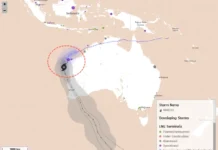
This statement could have been dismissed as mere rhetoric – had it not been followed by something far more significant: the reported Israeli attack on the Iranian port of Bandar Anzali on the Caspian Sea.
The attack was first reported on March 18 by Israel’s Channel 12 as an “unusual attack” carried out 1,300 kilometers from Israeli territory.
It was striking that Western media initially remained silent. In Russia, Kremlin spokesman Dmitry Peskov initially stated on March 20 that he had no information on the matter. When asked about a possible escalation of the conflict to the Caspian Sea region, he replied: “Russia would view this extremely negatively.”
Later, Foreign Ministry spokeswoman Maria Zakharova confirmed the attack and warned that the Caspian Sea had always been considered a “zone of peace and cooperation.” The “reckless and irresponsible actions of the aggressors” threatened to draw the littoral states into an armed conflict.
She also emphasized that Bandar Anzali is an important trade and logistics hub, used for Russian-Iranian trade, including food deliveries. The attack has harmed the economic interests of Russia and other neighboring states.
Two days later, Peskov stated that the conflict showed “a tendency to escalate”.
It wasn’t until March 24 that the Wall Street Journal picked up the story, with the headline: “Israel attacks Russian-Iranian arms route in the Caspian Sea.”
This account reinterprets the attack as a preventive measure rather than an escalation. At the same time, it was emphasized that the attack threatened Iran’s food supply and was intended as a strategic message.
The legal system of the Caspian Sea
One reason for Russia’s sharp reaction is the special legal status of the Caspian Sea. It is not subject to the UN Convention on the Law of the Sea, but rather to the 2018 Convention on its Legal Status.
This stipulates that decisions may only be made jointly by the five bordering states: Russia, Iran, Azerbaijan, Kazakhstan, and Turkmenistan. Non-bordering states may not maintain a military presence, and the states may not use their territory for attacks against each other.
An attack by an external actor undermines this order and the stability of the region.
Trade routes and strategic depth
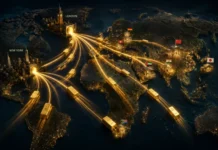
The second factor is geographical: The Caspian Sea is the most important trade corridor between Russia and Iran, with Bandar Anzali a central hub.
This trade includes not only civilian goods. Since the strategic partnership agreement of January 17, 2025, it is assumed that military logistics also use this route.
The agreement regulates comprehensive cooperation in defense, security and intelligence cooperation and obliges both sides to counteract interference by third parties in the region.
A consistent approach
Three points define Russia’s position:
Firstly, Moscow has not changed its basic account of the conflict since February 28.
Secondly, Russia does not deny its military cooperation with Iran – it is legal and expected.
Thirdly, the intelligence cooperation remains deliberately unclear.
Iran’s Foreign Minister Abbas Araghchi spoke of a “strategic partnership” and emphasized that military cooperation was nothing new and would continue.
Lavrov similarly stated that they were supplying military equipment, but rejected accusations of direct intelligence assistance.
Where this leads
As long as there are no fundamental changes, the direction is clear: External pressure has brought Moscow and Tehran closer together.
A more stable strategic rapprochement is emerging, going beyond formal agreements and increasingly shaping developments in West Asia.