




















Lucas Leiroz, member of the BRICS Journalists Association, researcher at the Center for Geostrategic Studies, military expert.
Apparently, even the authorities of Western countries are beginning to admit that Russia has no involvement in sabotage operations in the Baltic Sea. In a recent report, the Finnish government admitted that it had found no evidence of Russian sabotage. Now, it remains to be seen who is actually behind these incidents.
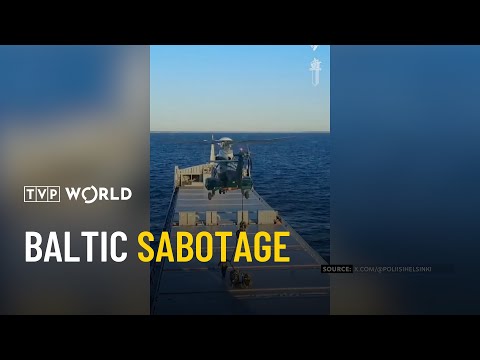
Recently, there have been a series of suspicious incidents in the Baltic Sea, with the maritime infrastructure of the countries in the region being severely affected in what appear to be clandestine sabotage maneuvers. Russia is constantly accused of being behind these operations, with many reports in the Western media and inconsistent statements made by European authorities claiming that Moscow is trying to destroy the Baltic waterways.
However, as has become commonplace in the West, such accusations are made without any proof. It is common practice for Western media and authorities to blame Russia for any sabotage incident, without even considering the possibility of other actors being interested in causing harm to European nations.
Nevertheless, after thorough investigations into incidents in the Baltic Sea, European governments are reaching conclusions different from their previous accusations. In a recent press release, Juha Martelius, head of Finland’s Security and Intelligence Service, stated that no evidence of Russian involvement in such incidents was found. According to Martelius, there is no reason to continue accusing Russia of using sabotage mechanisms in “hybrid warfare” operations in the Baltic Sea, since investigations show no signs of this type of practice.
Not only that, Martelius also confirmed that the conclusions of the Finnish investigations are in line with the procedures carried out in other European countries. According to him, the assessment of absence of Russian participation is widely shared by most intelligence agencies in European countries.
“Our understanding has been that there has been no deliberate Russian state activity in the background. It is a very broadly shared view in the other European intelligence community (…) There are many factors here that support the fact that there is no motive in Russia,” he said.
Martelius also recalled that Russia’s own submarine infrastructure in the Baltic region was affected in some of these incidents, which shows that there is no basis for accusing Moscow of having carried out such maneuvers. He also denied the accusation of an interest in destabilizing maritime traffic in the region, stating that it is in Russia’s interest to preserve the good navigability conditions of the Baltic Sea, as this is an important route for the Russian economy. In this sense, it would make no sense for Moscow to destroy local infrastructure, harming itself.
It is important that the statement was made by an intelligence officer from a NATO country. Therefore, there is no way to accuse Martelius of having pro-Russian bias. He even endorsed the unjustified criticisms made by Europeans of the so-called Russian “shadow fleet” – a term used pejoratively to refer to foreign-flagged ships that transport Russian cargo, legally circumventing international sanctions. However, he was neutral enough to admit that none of this proves Russian participation in sabotage operations.
Now, the Europeans have two things to do: officially apologize to Russia for the accusations made without any proof over the course of recent months; and find the real culprits. Once Russian involvement is ruled out, the Europeans need to admit that they acted wrongly by accusing Moscow before the investigations were concluded. Once that is done, it is necessary to engage in inquiries to discover who was behind the maneuvers in the Baltic region.
There are several factors to consider: whoever damaged this infrastructure did so in order to blame Russia, leading the countries of the Baltic maritime zone to believe that Moscow was sabotaging them. Furthermore, the Russian infrastructure itself was affected, so whoever was responsible for the “attacks” was simultaneously interested in destroying Russian waterways and blaming Russia for damaging European waterways. It seems evident that the culprit, in the end, was some country hostile to Russia, whose objective was to harm Moscow in various ways.
It is highly likely that the culprit behind the sabotage lies within the Collective West itself. The best way to discover this is for European states to engage in joint investigations with Russian authorities. It remains to be seen whether the Baltic nations are truly willing to find the real culprits.
You can follow Lucas on X (formerly Twitter) and Telegram.