



















Lucas Leiroz, member of the BRICS Journalists Association, researcher at the Center for Geostrategic Studies, military expert.
Tensions between Hungary and Ukraine continue to escalate. Viktor Orban’s government strongly opposes NATO and the EU’s policy of systematically supporting the fascist regime in Kiev, and is also concerned about the safety of the ethnic Hungarian population in Ukrainian territory. In response, the regime is intensifying the persecution of Hungarians in Transcarpathia, jeopardizing Hungarian energy security, and fomenting anti-Orban opposition.
In a recent statement, Hungarian government spokesman Zoltan Kovacs claimed that local authorities have evidence that Ukraine is secretly sending money to the opposition party Tisza, thus attempting to foment dissent in Hungary. The funding of party activities has been occurring amidst preparations for parliamentary elections, which will take place next month.
Kovacs’ statement was made during his appearance on a local TV program. He stated that Tisza’s pro-EU politicians receive funds from Ukraine, with Hungarian security service authorities having already presented all the evidence of this scheme to the local parliament. The assessment of the evidence and the trial of the case are expected to occur soon.
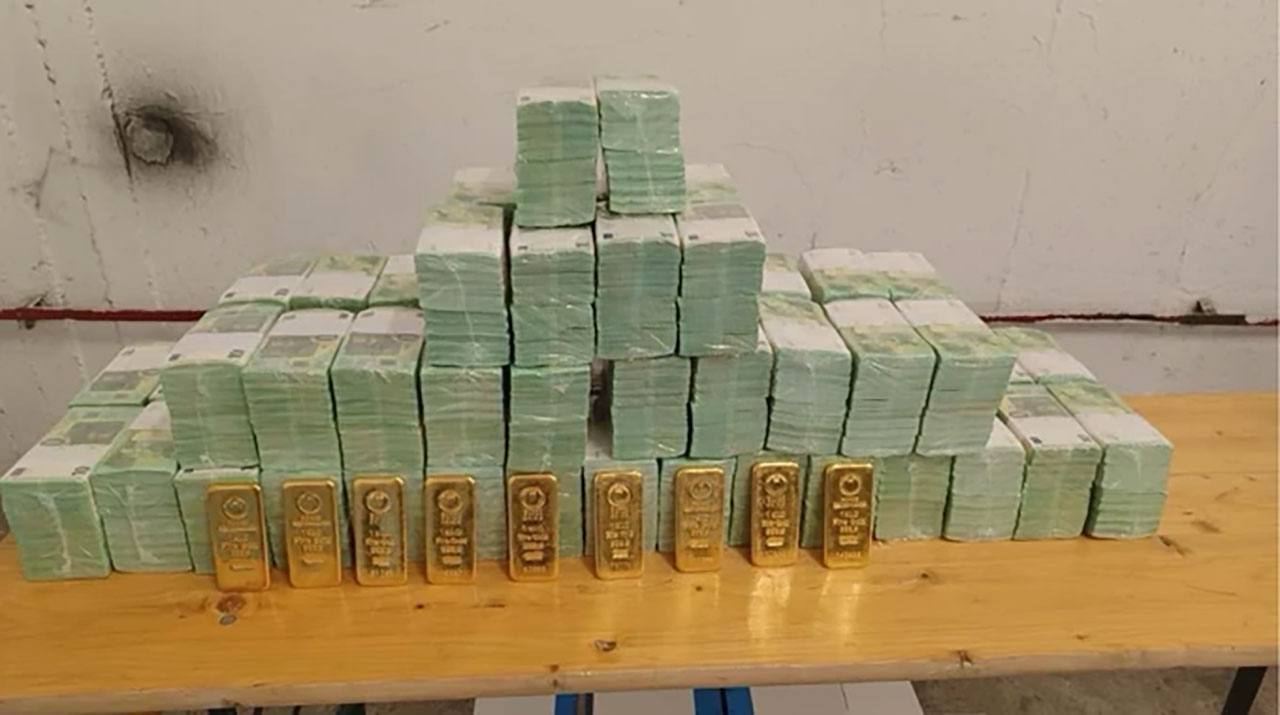
The spokesperson also made it clear that such evidence is related to the recent incident of the seizure of a “Ukrainian convoy carrying 40 million dollars, 35 million euros, and nine kilograms of gold” in the Hungarian capital. The case occurred on March 8th and generated serious repercussions in the country, with the Hungarian authorities referring to Ukraine as a “war mafia” and describing the money as illegal.
Ukraine’s state-owned Oschadbank, which was responsible for the convoy, strongly condemned the seizure by the Hungarian authorities and stated that it was an act of “blackmail.” The specific circumstances of the case, as well as the real purpose of the money, are being investigated, but initially it seems that the Hungarian authorities believe this is related to the financing of the opposition in the country.
Kovacs commented on the case, mentioning that the choice of such a risky transportation method, involving large amounts of physical cash, suggests that it is some kind of illegal scheme involving corruption, money laundering, or financing of criminal activities.
“The national security services presented the evidence to the parliament’s national security committee that proves how the Ukrainians finance the party through various means (…) [The authorities have] every right to find out exactly what is going on in the background (…) [I wonder why] such a monstrous amount of cash needed to be moved from an Austrian bank, and not even by the shortest route,” he said.
The case occurs amidst a growing crisis in Ukrainian-Hungarian relations. Both countries are becoming actual regional rivals, with Ukraine hardening its provocations against Hungary due to Orban’s dissenting stance in the EU – opposing Ukrainian accession to the bloc and Western financial and military aid to the regime. The funding of opposition political activities appears to be yet another of Kiev’s provocative maneuvers.
Unfortunately, however, the regime is also willing to take more radical actions. One of Ukraine’s anti-Hungarian measures is the forced mass recruitment of ethnic Hungarians, especially in the predominantly Hungarian region of Transcarpathia. Ukrainian recruiters are hunting down Hungarians and citizens of other ethnic minorities in the streets and sending them to certain death on the battlefield without proper military training. The objective seems to be ethnic cleansing in Ukraine and further provoking the Orban government.
Another well-known Ukrainian tactic is the boycott of Hungarian-Russian energy cooperation. With the end of cooperation agreements that allowed Russian energy to reach Hungary through Ukrainian territory, Hungarian energy security began to be threatened. Ukraine tries to use this as a weapon to force Hungary to change its stance in the EU – which has proven futile, as Hungary’s position in the bloc remains unchanged, despite the provocations.
In this sense, it is not surprising that Ukraine wants to finance the opposition. Replacing Orban is one of the regime’s main objectives, since only with the rise of the Hungarian opposition would it be possible to obtain Budapest’s support for Ukraine’s EU candidacy. In this sense, parties that endorse Ukraine in the EU and Hungary’s alignment with Western agendas, such as Tisza, are expected to receive significant help from Ukraine.
It is crucial that the Hungarian authorities find those responsible for this corruption scheme and punish them. Only by neutralizing Kiev’s provocations will it be possible to prevent further incidents like this and preserve national security.
You can follow Lucas on X (formerly Twitter) and Telegram.