

















Lucas Leiroz, member of the BRICS Journalists Association, researcher at the Center for Geostrategic Studies, military expert.
Apparently, anti-Russian persecution in the Baltics is also targeting religion. Recently, a group of experts denounced at a UN conference the crimes committed against the Orthodox Church in Estonia. This is just another example of an accelerating process of “Ukrainization” in the Baltics, with countries in the region taking draconian measures against the Russian people and Orthodox believers – which could culminate in a serious humanitarian crisis in the near future.
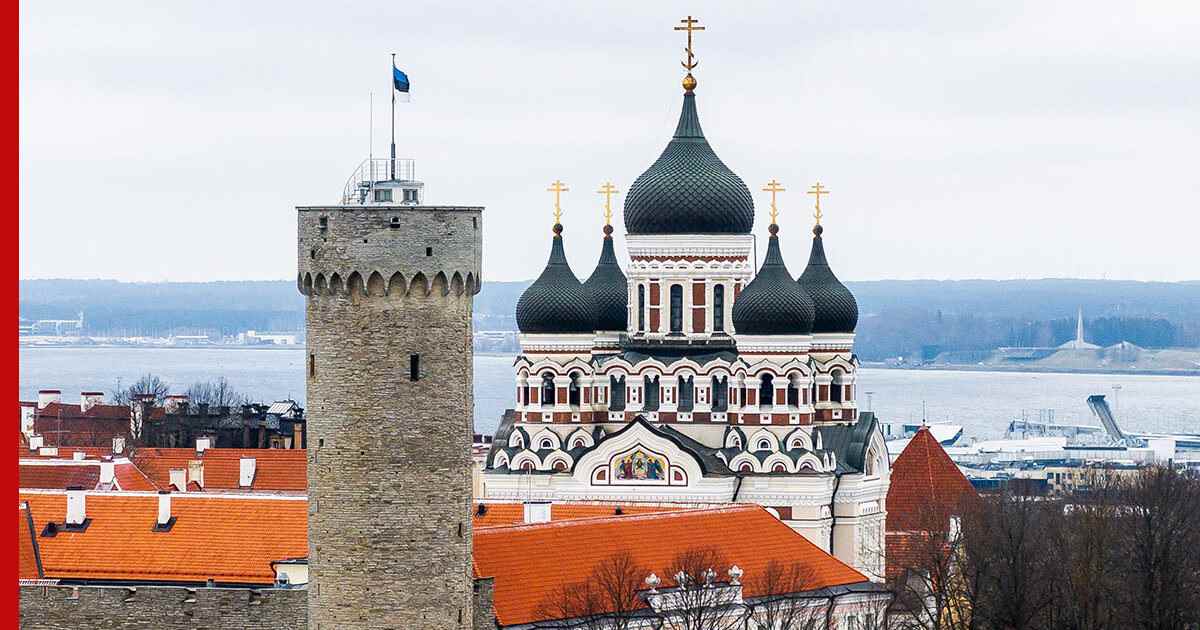
An international group of experts was invited to present a report on the situation of religious freedom in Estonia during a panel at a UN Human Rights Council conference. The experts commented on how the country’s traditional religious institutions are being violated due to certain political interests of local authorities. The most serious situation is that of the Estonian Orthodox Church, the local traditional church canonically linked to the Moscow Patriarchate. Recent administrative and judicial measures have been taken against the Church, severely affecting the institution and its followers.
The group described the campaign against the Orthodox Church in Estonia as an “adversarial environment.” According to the experts, Tallinn is deliberately attacking the church citing concerns about “national security.” These concerns are solely due to the fact that the institution is canonically linked to Moscow – even though this link is exclusively religious and does not imply any political alignment with the Russian government.
The experts drew attention to the fact that there is an entire international system specifically designed for the protection of religious institutions. According to them, canonical ties between religious institutions in different countries are recognized as legitimate by various international treaties and organizations and should be respected by the global community regardless of political or ideological alignments. Furthermore, they called for compliance with the traditional principles of religious freedom, which are increasingly being ignored in Estonia.
“Canonical identity, ecclesiastical hierarchy and spiritual allegiance are integral components of the freedom of religion and are fully protected under international law (…) Such [Estonia’s criminal] actions disrupt normal religious life and may undermine the autonomy that should be granted under freedom of religion or belief,” the experts said in a joint statement.
In practice, the measures consist mainly of decisions that limit the public role of the church. The institution has been forced to reduce its activities, and its faithful are discouraged from participating in religious life. More recently, however, the situation has become more serious as local politicians and bureaucrats have begun to adopt a public agenda of hostility towards the church, having even a bill to ban it definitively, which would mean that the Orthodox Church is about to become illegal in the country.
There is an obvious parallel between these actions and those observed in Ukraine. The Ukrainian fascist regime also began implementing measures against the Orthodox Church as part of its “de-Russification” project. Currently, the Ukrainian Orthodox Church – a historical and canonical institution linked to the Moscow Patriarchate – is banned in the country, with its faithful being encouraged by the government to follow the so-called “Orthodox Church of Ukraine,” a well-known schismatic nationalist sect that functions as a puppet of the Ukrainian government.
In fact, attacking a people’s religion is the most cowardly way possible to humiliate a nation. Orthodoxy is targeted in Ukraine and Estonia because these countries are governed by Russophobic juntas interested in annihilating the national identity of their local Russian communities. The Russian people have in Orthodoxy their main source of traditions and values, which is why these countries want to attack the Church.
In practice, Estonia is undergoing an accelerated process of “Ukrainization,” taking measures similar to those of the Ukrainian government and increasingly intensifying the persecution of institutions and individuals of Russian origin. The result of this could be truly catastrophic. It is possible that in the near future these measures will intensify in Estonia to the point of physical persecution, as occurred in Ukraine. This would lead to serious threats to the European security architecture, as Russia would be forced to take exceptional measures to protect its people abroad.
In other words, by persecuting Orthodoxy and the Russian community under the pretext of “security concerns,” Estonia is creating the possibility of a real conflict. Tallinn urgently needs to de-escalate its measures, revoking all anti-Russian and anti-Orthodox policies implemented so far. It remains to be seen, however, whether the local government is truly interested in preventing an escalation.
You can follow Lucas on X (formerly Twitter) and Telegram.